
First Solar announces fifth US factory
First Solar has revealed plans to open its fifth factory in the United States. The new facility is expected to add 3.5 GW of annual production capacity at a cost of $1.1 billion.
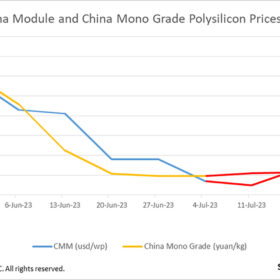
Module prices revert to descending trajectory after a brief rally
In a new weekly update for pv magazine, OPIS, a Dow Jones company, provides a quick look at the main price trends in the global PV industry.
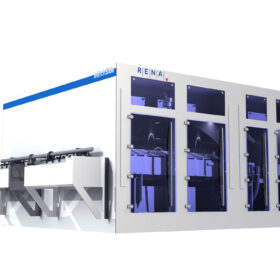
RENA announces 1.8 GW sale for new TOPCon equipment
German company RENA Technologies has announced the first sales of a new tool for silicon cell manufacturing. The tool is used for etching/removal of unwanted material on one side of a solar cell, and will be integrated into the gigawatt-scale production of an unnamed manufacturer in South Asia working with TOPCon technology.
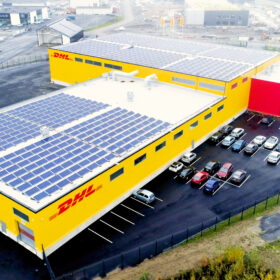
Is the EU doing enough to establish a solar manufacturing supply chain?
Compared to the Inflation Reduction Act (IRA) signed by Joe Biden’s administration in the US, the EU’s approach to establishing solar manufacturing appears slow and lacking in clarity. In this blog post, I will explore the EU’s renewable energy policy, specifically its emphasis on solar manufacturing, and evaluate whether Brussels is doing enough to establish a European solar supply chain.
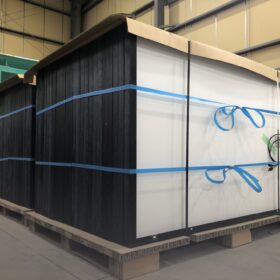
Marubeni, Hamada enter solar panel recycling business
Japan’s Marubeni and Hamada have launched Rexia Corporation to offer solar panel recycling and reuse services across the country, diverting material from landfill and giving a second life to older panels.
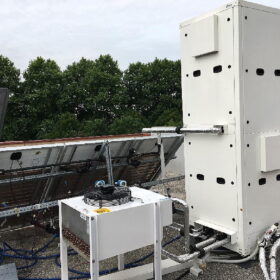
Residential heat pump based on finned coil evaporator, PVT collectors
Scientists in Italy have developed a 5 kW direct-expansion solar-assisted heat pump that uses alternatively two different evaporator technologies. The cooling of the PV module unit by CO2 evaporation increases power production by 8%.

To achieve net zero energy status, solar-powered buildings should not exceed 10 floors
Researchers in Canada have found that nearly zero-energy buildings (NZEBs) with on-site solar energy generation should not exceed an energy use intensity (EUI) of 50 kWh/m2a, which they said corresponds to a maximum of 10 floors. They also ascertained that the maximum permitted EUI by net-zero energy status is 17–28 kWh/m2a.
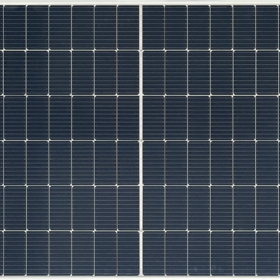
SDN unveils 600 W solar modules for floating PV
South Korea’s SDN has developed new bifacial solar modules based on M10 wafers. The new products feature a power conversion efficiency of 21.46% and, according to the manufacturer, are the world’s most efficient floating PV panels.
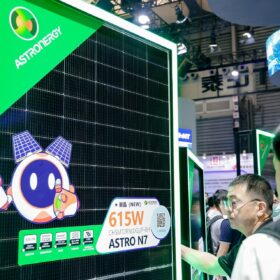
Chinese PV Industry Brief: Three Gorges buys 2.2 GW of PV panels for $0.18-019/W
China Three Gorges Group has announced its latest PV module procurement results, while GCL-Si has revealed plans to raise CNY 5.8 billion ($812.9 million) via a private placement to finance its expansion.
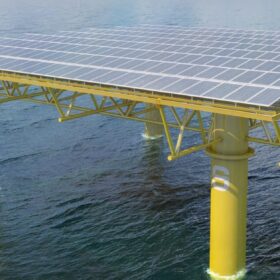
Offshore floating PV demonstrator to go online on Belgium’s North Sea coast
The SeaVolt consortium says it will launch an offshore floating PV demonstrator off the Belgian port of Ostend. The main companies – Tractebel, DEME, Equans and Jan De Nul – say the anchored floating array will collect data for at least a year to scale up the tech.
