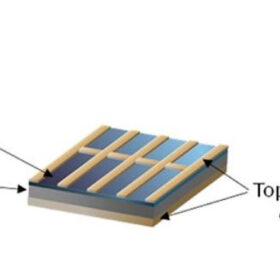
PEDOT:PSS/silicon solar cell built at room temperature with 10.1% efficiency
Japanese researchers have fabricated a heterojunction (HJT) solar cell with silicon and a polymer material known as PEDOT:PSS under room temperature conditions. It has an efficiency of 10.1%, an open-circuit voltage of 0.57 V, a short-circuit current density of 33.3 mA/cm2, and a fill factor of 0.53.
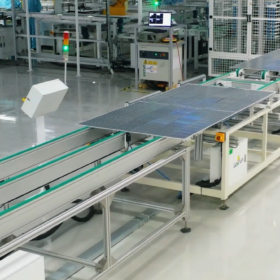
India’s Rayzon Solar to make TOPCon modules in US
Chirag Nakrani, the director of Rayzon Solar, told pv magazine that the company’s 500 MW PV module factory in the United States will start producing TOPCon solar modules by June 2024.
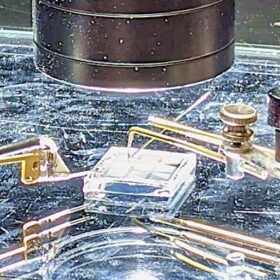
Bifacial CdTe solar cell achieves record power density via film lithography
The US National Renewable Energy Laboratory (NREL) and First Solar have used cracked film lithography (CFL) to build a bifacial cadmium telluride solar cell with a power density of 20.3 mW cm−2. They claim the cell has a higher bifacial power density than any polycrystalline absorber currently manufactured at scale.
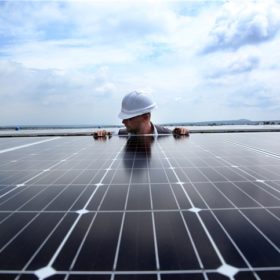
Iberdrola plans to open 1.6 GW PV module factory in Spain
Spanish energy giant Iberdrola has revealed plans to open a second solar module factory in Spain, following its first announcement in February. The initiative will require European funding to ensure its competitiveness.
Shangji Automation launches PV module production with 16 GW factory
Shangji Automation has announced plans to invest CNY 5 billion ($726 million) in a new 16 GW factory. Commercial production is scheduled to start in the third quarter of 2023.
Kosol Energie buys 850 MW PV module production line from SC Solar
India’s Kosol Energie is expanding its annual PV module production capacity to 1.1 GW with the installation of a new 850 MW line from SC Solar. It is aiming for 1.9 GW of cumulative PV module capacity by the end of the current fiscal year.

Summit Ridge Energy procures 1.2 GW of US-made Qcells panels
Summit Ridge Energy’s latest order marks the largest domestic community solar purchase of PV modules in US history. It includes 20 MWh of Qcells Geli energy storage systems.
Grew Energy wins 2 GW of wafer-to-module capacity in India
India’s Grew Energy will secure $69.3 million of incentives for 2 GW of integrated wafer-cell-module production.
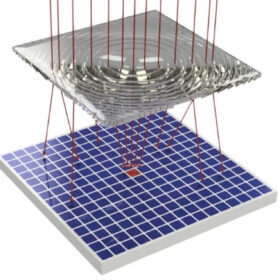
Taiwanese scientists develop high-concentration PV system
Taiwanese researchers have developed a system featuring a 2 × 2 Fresnel lens array and a solar panel made of III-V materials and polycrystalline solar cells, with low light leakage.
Bigger modules, bigger headaches?
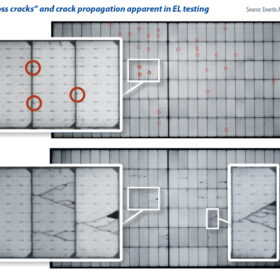
The debate continues over whether super-sized, high-power solar modules are a good thing for the industry and they appear to be here to stay. Vicente Parra and James Whittemore, from Enertis Applus+, consider the pitfalls to avoid when designing high-power solar projects.
