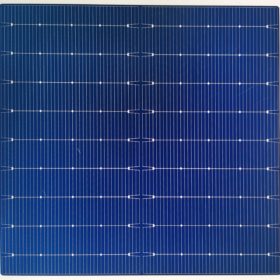
Chinese PV Industry Brief: Golden Solar, Boamax announce new module factories
Golden Solar has unveiled a plan to set up a new 1.5 GW production line for heterojunction products in the Zhangjiakou Renewable Energy Demonstration Zone. Boamax, meanwhile, said it wants to set up an 18 GW panel factory in Inner Mongolia.

Photovoltaic signboard with 18.5% efficiency
Dansk Solenergi, a Danish building-integrated PV specialist, has launched a round, 95 W solar module that works as a PV signboard. Its 35 solar cells, which remain hidden behind an image of Earth, have an efficiency of 18.5%.
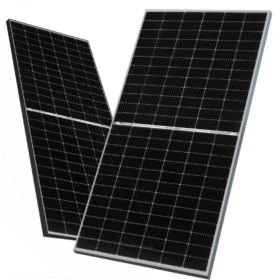
JinkoSolar claims 23.86% efficiency for n-type, TOPCon monocrystalline panel
JinkoSolar’s newest PV module has an efficiency rating of 23.86%. It is based on its TOPCon mono cell tech, which achieved a record efficiency of 26.1% in October, as confirmed by TÜV Rheinland.
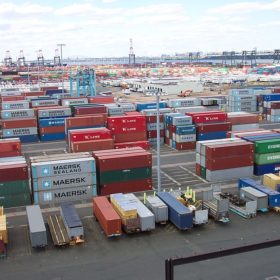
India scraps solar anti-dumping probe
An entity under India’s Ministry of Commerce and Industry has terminated an anti-dumping probe into solar cells from China, Thailand, and Vietnam.
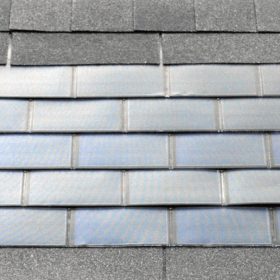
TÜV Rheinland offers certification for building-integrated PV
Germany’s TÜV Rheinland has defined safety and quality guidelines for building-integrated photovoltaic (BIPV) modules to bring more transparency to the market.
Schüco warns of more solar modules with defective backsheets
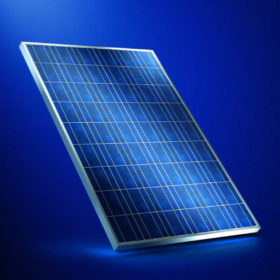
Schüco has expanded its recent warning letter about potential solar panel defects to include more products. The new list includes PV modules the company delivered between 2010 and 2014.
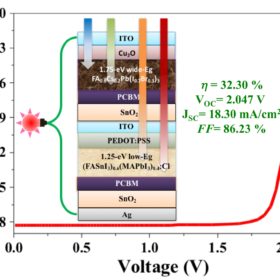
All-perovskite two-terminal tandem solar cell tech with 32.3% efficiency
Indian scientists have designed a new all-perovskite tandem solar cell configuration that can reportedly achieve higher efficiencies than similar devices built with the same materials. The top perovskite cell has a wide bandgap of 1.75 eV and the bottom perovskite cell has a bandgap of 1.25 eV.

Indian developer enters solar panel business with 2 GW factory
ReNew Power plans to switch on 2 GW of solar cell and module production capacity by September 2023.

US ports blocking shipments of solar components due to forced labor fears
US ports have been blocking shipments of solar components since the summer due to concerns about forced labor in China’s Xinjiang region.

Weekend read: Solar tops the bill
The US Inflation Reduction Act of 2022 sets aside $369 billion to decarbonize the economy and respond to climate change. pv magazine USA’s Anne Fischer and Ryan Kennedy report on the boost the landmark legislation is expected to provide to solar and battery deployment and manufacturing.
