
Nano-grid home runs solely on DC power
A team of researchers at Purdue University are retrofitting a 1920s home to run completely on DC current.

The economics of perovskite solar manufacturing
Scientists in Switzerland put together a detailed analysis of the projected costs of designing and operating a 100 MW perovskite solar cell production line in various locations, taking in labor and energy costs as well as all materials and processing. The found that perovskite PV could be cost-competitive with other technologies even at much smaller scale, but noted that this still depends on the tech proving its long-term stability, and impressive achievements in research being successfully transferred to commercial production.
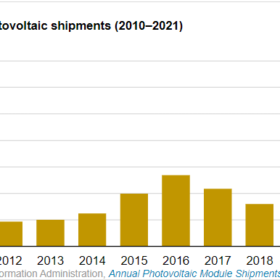
US solar panel shipments rose by 32% in 2021
The US Energy Information Administration’s latest report shows a steady climb in PV module shipments last year.

New ferroelectric material for lead-free perovskite solar cells
US scientists have discovered a lead-free perovskite material with ferroelectric properties that can be used in solar cells. The perovskite compound was grown from cesium germanium tribromide and initial analysis shows that it produces ferroelectricity.

Laser-enhanced contact optimization improves TOPCon solar cell performance by 0.6%
Scientists in Germany have improved the efficiency of an industrial TOPCon solar cell from 23.8% to 24.1% by using laser-enhanced contact optimization as a post-firing treatment.
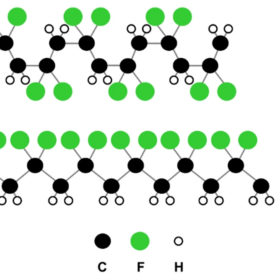
Putting polyvinylidene-fluoride backsheets to the test
US scientists tested PV modules built with backsheets and polyvinylidene-fluoride (PVDF) layers, to replicate the degradation the material has suffered in the field of accelerated testing. By exposing the modules to multiple stresses, they were able to cause degradation in the backsheet materials. Though this did not closely match what has been seen in the field, such testing can be useful in identifying potential weaknesses.
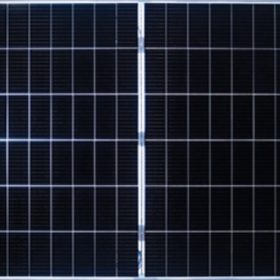
Vikram Solar unveils 660 W bifacial solar modules
Vikram Solar has unveiled new mono PERC bifacial modules with front-side power outputs from 635 W to 660 W. The modules feature glass-to-glass construction and provide up to 25% bifacial gain.
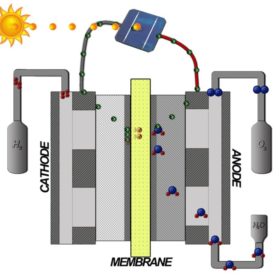
Solar-driven multigeneration system for hydrogen, electricity, heat
An Iranian research group has developed a system that combines photovoltaic-thermal modules with organic Rankine cycle, a proton exchange membrane electrolyzer, and liquefied natural gas. The ideal system has an exergy efficiency of 16.24%, a cost rate of $4.48 per hour, and 33.32 kW of net electrical power.

Polysilicon price relief in 2023 as industry scales to 500 GW
Clean Energy Associates says solar wafer pricing will fall by 23% by the end of 2023, while BloombergNEF sees 500 GW of manufacturing capacity online by the end of next year.
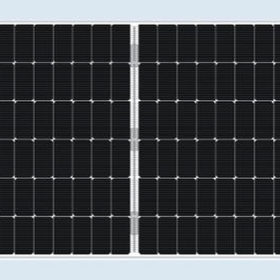
Yingli unveils n-type TOPCon solar panel with 22.0% efficiency
Yingli’s 156-cell Panda 3.0 PRO module has a temperature coefficient of -0.30% per degree Celsius and is available in wattages ranging from 590 W to 615 W, with a bifaciality of more than 90%.
