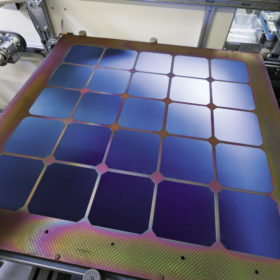
Meyer Burger expects higher prices, lower solar module output
Swiss panel manufacturer Meyer Burger wanted to increase the annual capacity of its production lines this year, but the ramp-up has been delayed due to ongoing bottlenecks in global supply chains.
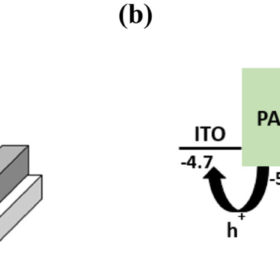
Inverted perovskite solar cell with 16.94% efficiency
A US-Chinese research group has built a perovskite solar cell with a hole-transporting material (HTM) based on conducting polyaniline (PANI) polymer. The device showed significantly higher efficiency than a reference solar cell relying on an HTM made of commonly used PEDOT:PSS.
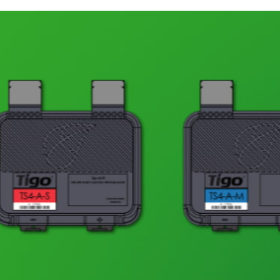
Tigo releases design quality tool for large commercial solar
The US module level power electronics provider also introduced an installer certification course.
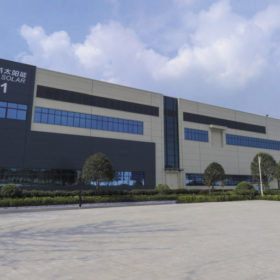
Chinese PV Industry Brief: Tongwei was largest cell manufacturer in H1 2022
Tongwei was followed by Aiko Solar, Runergy, Solar Space and Jietai Technology. The top five cell manufacturers supplied a total of 59 GW.
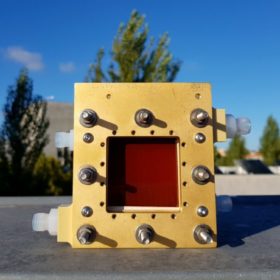
Straight to storage via solar integrated batteries
Scientists in China evaluated the prospects for various approaches to integrating both solar generation and energy storage in a single device. Their work outlines several ways this could increase the efficiency of solar energy storage, and recommends that future research on this area should focus on integration of materials with the highest specific capacity for energy storage, alongside the dual function of solar energy harvesting.
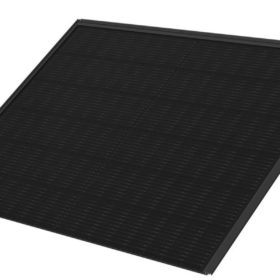
Aleo Solar unveils 345 W rooftop photovoltaic module
The new panel from the German manufacturer may also be used as a solar tile and is claimed to be particularly suitable for historical buildings and aesthetically demanding new construction and renovation projects.
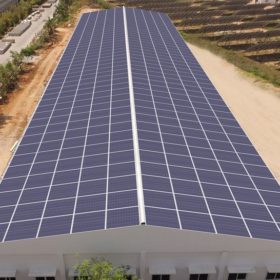
Integrated solar roof from India
Visaka Industries’ patented Atum solar roof is reportedly able to reduce building temperatures by up to 40%.
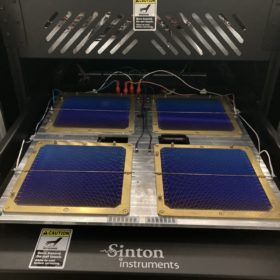
Using p-type wafers in heterojunction solar cells, not a lost battle
An international research group has reconstructed the trajectory of p-type wafers in the heterojunction solar cell segment and has identified the lack of knowledge about boron-oxygen related light-induced degradation (BO-LID) as the main cause for the limited adoption of these wafers and the success of their n-type counterparts. According to the scientists, however, there is still big room for improvement for p-type technologies in heterojunction cells.
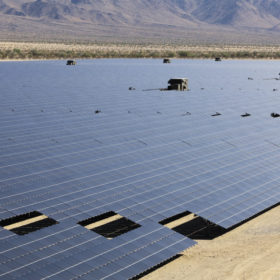
US 2021 solar panel shipments total $9.8 billion at $0.34/W
Solar module prices fell despite supply chain pressures, rising shipping costs, and increased materials costs.
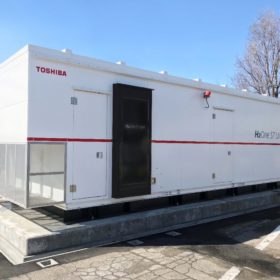
Toshiba energizes PV-powered hydrogen refueling station in Japan
The system is reportedly able to refill about eight hydrogen fuel cell vehicles, each in three minutes. It is also able to supply electric power by using hydrogen produced with renewable energy within the station.
