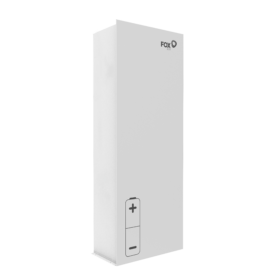
Smarter E Products: Fox exhibits all-in-one storage system
Intersolar 2022 has provided FoxESS the ideal opportunity to showcase its all-in-one storage system, the sleek and compact design of which allows for advanced performance, ease of installation and suitability to both indoor and outdoor settings.
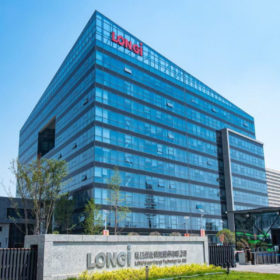
Chinese PV Industry Brief: JA Solar major winner in solar panel tender with 3.1 GW in bids
Meanwhile, Trina Solar has established a new branch for upstream operations and Longi has a officially changed its company name.
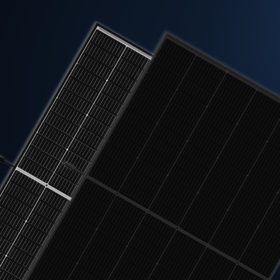
Smarter E Products: Trina Solar showcases G12 solar modules for rooftop applications
All the products rely on the company’s 210 rectangular silicon wafer (G12R) cell technology. The manufacturer claims these new products can increase the installed capacity of residential roofs by 5-7%. The largest panel is a 21.5%-efficient device with a power output of up to 580 W and the smallest features an efficiency of up to 21.3% and a nominal power of up to 425 W.
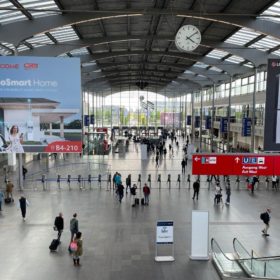
Intersolar Europe Day 3: Until next year!
Follow pv magazine live for the final day of Intersolar Europe 2022 to make sure you stay abreast of the latest news, analysis, techs and trends.
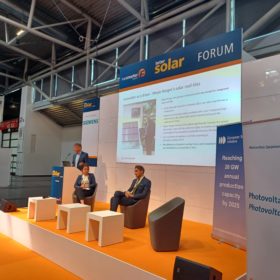
Meyer Burger CEO Gunter Erfurt talks solar tiles at Intersolar
Meyer Burger CEO Gunter Erfurt spoke with pv magazine at Intersolar 2022 about its paXos-designed solar tile technology, and why the Swiss company won’t make the same mistakes as Tesla when it comes to the European market.
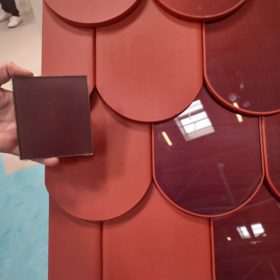
Terracotta solar tiles for historical buildings
Germany’s paXos, whose solar roof tiles were bought by Meyer Burger and unveiled last year, has shown off its new “Beaver Tail” terracotta solar tiles at Intersolar 2022.
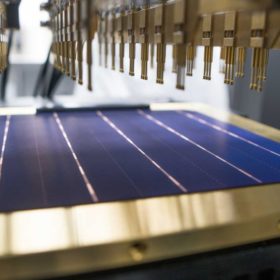
Trailblazer tipped to accelerate Australia’s clean energy transition
The University of New South Wales and the University of Newcastle have revealed plans to join forces to develop and commercialize “world-leading” technology in solar, renewable hydrogen, storage and green metals.
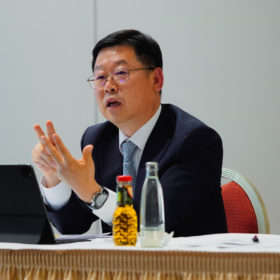
Hanwha Q Cells to build US solar module factory, expand cell capacity in South Korea
Hanwha Q Cells plans to build a 1.4 GW solar panel factory at an undisclosed location in the United States. It has also announced plans to expand its cell capacity to 5.4 GW in South Korea. CEO Justin Lee spoke to reporters at the Smarter E event about the company’s plans and current supply chain issues.
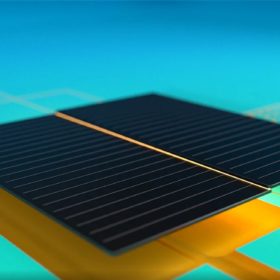
Smarter E Products: REC showcases G12 residential heterojunction PV module with gapless design
REC’s new heterojunction solar panel series features efficiencies of up to 22.3% and an operating temperature coefficient of -0.26% per degree Celsius.
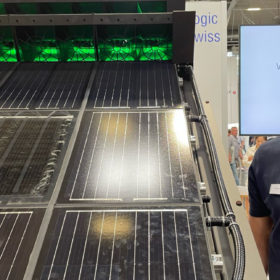
Intersolar Europe Day 2: Combining solar and wind power in one module.
The pv magazine team spent the first day of Intersolar walking the 132,000 m2 across 12 exhibition halls to meet with the established market leaders, the new kids on the block, and the industry’s analysts to bring you the latest PV and energy storage trends from the ground. Overall, 1,356 exhibitors are showcasing their innovative products, services, and business models, while more than 50,000 visitors are expected at the three-day show.
