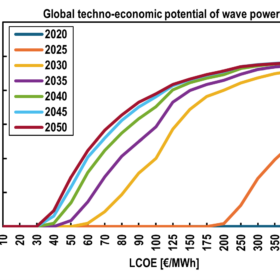
Wave power poised to complement solar PV in future global energy mix
Wave power may emerge as a valuable renewable energy source given recent economic and technical projections indicating a substantial potential of wave energy, particularly in coastal and island regions. Wave and solar resources are complementary around the world and thus may lead to energy systems combining solar PV with wave power. Islands may benefit most from wave power added to solar PV.
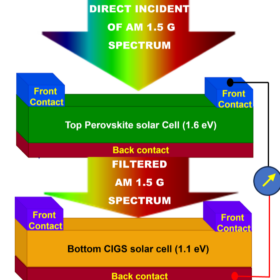
First attempt to build lead-free perovskite-CIGS tandem solar cells
Indian researchers simulated a novel pairing of a CsGeI3 lead-free halide perovskite top cell with a copper-indium-gallium-selenide bottom cell. The resulting tandem device has the potential to achieve a power conversion efficiency of 26.06%

Photovoltaics for cocoa pod splitting
Scientists have designed a cocoa pod splitting device that runs on five monocrystalline PV panels. They have simulated its operation and have found it can achieve a splitting efficiency of 98.92%.

Redington, Websol partner on small solar kits for Indian rooftops
Redington has partnered with Websol Energy System to launch 2 kW to 10 kW solar kits for homes and small businesses, combining high-efficiency modules with inverters and balance-of-system (BoS) components.
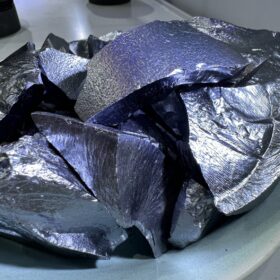
Chinese PV Industry Brief: Polysilicon prices edge higher, wafers flat
The upward trend of polysilicon prices continued this week, although by only 0.42%, with polysilicon producers keeping utilization rates between 46% and 80%, according to the CNMIA.
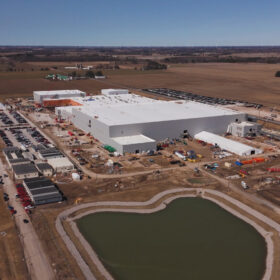
Corning, T1 Energy agree to U.S. domestic solar polysilicon, wafer supply deal
The partnership supports a full domestic energy supply chain from raw polysilicon to finished solar panels.
The impact of soldering flux on TOPCon solar cell degradation
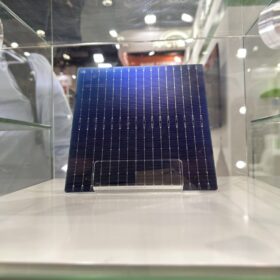
UNSW researchers have investigated the impact of two types of soldering fluxes on TOPCon solar modules under damp heat conditions and have found that “no-clean” soldering fluxes can cause severe corrosion of front silver-aluminum contacts. The researchers have also found that denser metallisation structures and lower aluminium content improve corrosion resistance.
China solar cell rally stalls amid worsening margin squeeze
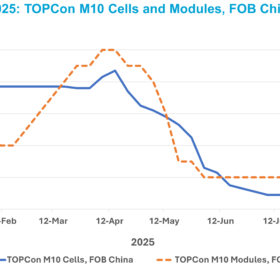
In a new weekly update for pv magazine, OPIS, a Dow Jones company, provides a quick look at the main price trends in the global PV industry.

China’s $7 billion consolidation plan may be reflected in prices in short time
China’s reported $7 billion plan to cut polysilicon overcapacity could prompt wafer makers to stockpile lower-cost material and push prices higher, with cell and module suppliers more willing to accept increases, Xin You, senior market analyst at S&P Global, tells pv magazine.

Scientists design lead-free 2T all-perovskite tandem solar cell with potential 28.22% efficiency
The proposed tandem features a wide bandgap antimony-doped Cs2AgBiBr6 (specifically Cs2AgBi0.75Sb0.25Br6) top cell and a narrow bandgap formamidinium tin iodide (FASnI3) bottom device.
