
World’s largest solar tree record smashed
With a PV panel surface area of 309.83 sq.m, the solar tree is officially certified by Guinness World Records (GWR) as the largest solar tree in the world.
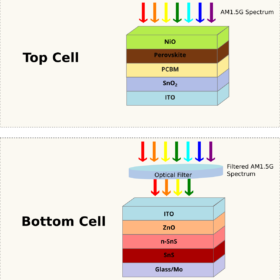
Double-junction perovskite-tin sulfide PV cell design with up to 28.92% efficiency
An Iranian-Italian research group has simulated a double-junction tandem solar cell based on perovskite and tin sulfide. They said that it can reach an efficiency rating of between 22.9% and 28.92%.
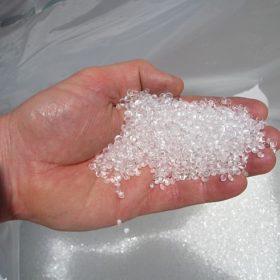
EVA the next supply chain pinch point for solar
With polysilicon production capacity having been rapidly rolled out after last year’s shortages, China analyst Frank Haugwitz has suggested global manufacturing capability for the ethylene vinyl acetate used on PV panels could struggle to keep pace with what is expected to be another record year of demand for solar.
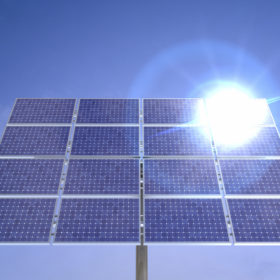
Temperature-dependent model to calculate solar LCOE
Developed by researchers in Saudi Arabia, the novel approach considers both the temperature-dependent power yield and the solar module time to failure (TTF), among other factors. According to its creators, the model can be applied to all kinds of module and cell technologies.

France provides incentives to landscape-integrated BIPV
The French authorities have so far selected four BIPV products that are eligible for the incentive scheme.
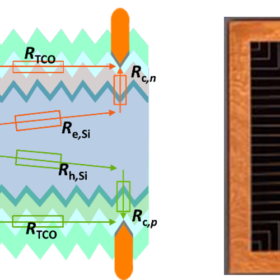
Bifacial heterojunction solar cell with 22.84% efficiency, reduced indium consumption
A Dutch-Chinese research team has developed a bifacial heterojunction PV cell with a 67% reduction in transparent conductive oxide (TCO) use. The TCOs used for the cell are based on indium(III) oxide (In2O3), which is considered a technology-critical element by many experts.
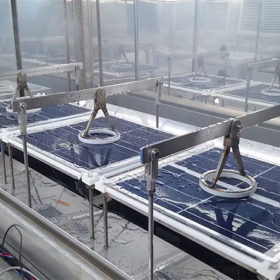
US consortium aiming for 50-year PV
The US Department of Energy’s durable materials consortium is a multi-laboratory unit that stress-tests solar modules for durability. It aims to extend the useful life of PV.
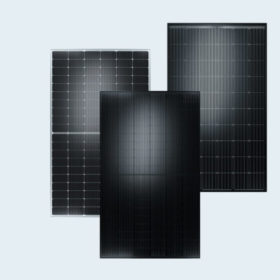
Solarwatt is the first solar module manufacturer enabling carbon compensation
The company’s German customers can buy, together with the modules, CO2 certificates so that the products are completely neutral. According to the manufacturer, the additional costs are about €11 per module.

Chinese PV Industry Brief: Xinte wants to add another 200,000 tons of polysilicon capacity
Xinte’s new manufacturing facility is planned to be located in Changji county, in the Xinjiang Uygur autonomous region. Moreover, Longi is planning to build another factory in Erdos City, Inner Mongolia.
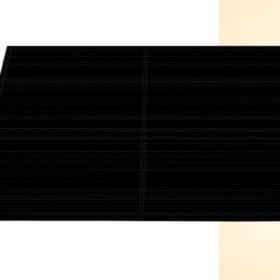
Canadian Solar launches 420W rooftop solar module with 21.5% efficiency
The new product is part of the company’s HiKu6 series based on 182mm wafers. Its temperature coefficient is 0.34% and its electrical characteristics are claimed to be compatible with the most common photovoltaic inverters thanks to current values below 14A.
