
CEA-INES, WattByWatt achieve 28% efficiency for tandem perovskite-silicon solar cell
France’s CEA-INES and WattByWatt, a Canadian startup, announced a 9 cm2 tandem perovskite-silicon PV cell with an efficiency of 28%, the result of an ongoing research collaboration.
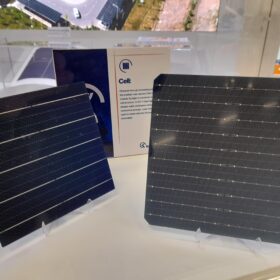
How to integrate machine learning in solar cell manufacturing
Scientists in Korea have developed a new methodology to employ machine-learning models in “smart” solar cell manufacturing. They utilized data collected from equipment that closely resembles actual industrial manufacturing tools.
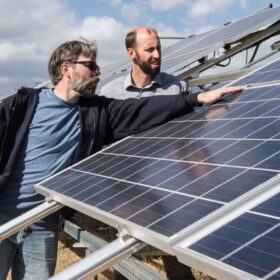
How long do residential solar panels last?
Several factors affect the productive lifespan of a residential solar panel. In the first part of a series, we look at the solar panels themselves.
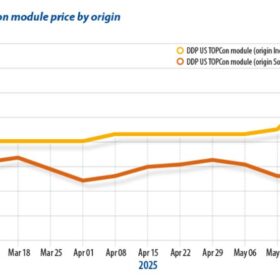
Trade headwinds fragment PV prices
Tempestuous trade conditions and policy uncertainty have led to module price fragmentation in the United States. Ahead of an expected reduction in manufacturing capacity utilization, leading manufacturers in China produced a high volume of cells in the spring. OPIS editorial director Hanwei Wu explains the latest market developments.

Double materiality assessment: Why rigorous ESG risk mapping isn’t optional anymore
Double Materiality Assessment (DMA) has become a central concept in Environmental, Social, and Governance (ESG) frameworks, especially under recent regulatory initiatives like the EU Corporate Sustainability Reporting Directive (CSRD). While implementation of DMA will only become mandatory for many companies over the next few years, there are already discussions at the EU commission in Brussels about simplifying the process to ease adoption. As an early adopter, Trinasolar shares insights on the purpose and benefits of DMA, makes a strong case for full-scope transparency, and reflects on key learnings from the 2024 DMA matrix rollout.
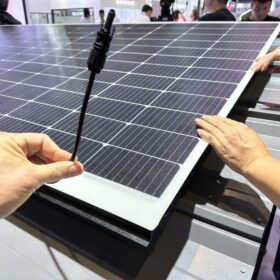
Sinovoltaics updates solar module manufacturer financial stability ranking
The quality assurance provider reported India-based Insolation Energy, Waaree Renewable Technologies, and Solex Energy maintained their top three spots in the ranking this quarter. The number of companies with healthier Altmann-Z scores stayed the same at nine.
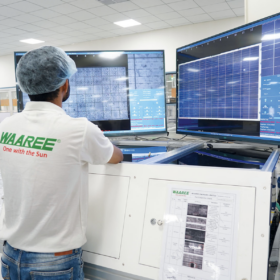
Waaree Energies opens 1.8 GW solar module plant in India
Waaree Energies has commenced production at its new 1.8 GW solar module factory in western India.

Novel MPPT method combines APO, model-predictive control
An international research team has tested a hybrid control technique combining adapted perturb and observe (APO) with model-predictive control to address complex partial shading in solar arrays. The method, validated through simulation and physical experiments, reportedly outperforms existing approaches.

Non-stop solar innovation despite module oversupply
It’s no secret that prices throughout the solar supply chain have been at rock bottom over the past 18 months. Alex Barrows and Molly Morgan of CRU Group explore how the market reached the imbalance that caused PV prices to crash, what this has meant for innovation, and how it might affect future technology transitions.

Impact of hydrogen on silicon solar cell degradation
German researchers have reviewed recent studies on hydrogen-related degradation in silicon solar cells. They said the work is timely, with n-type silicon dominating production and antimony-doping emerging.
