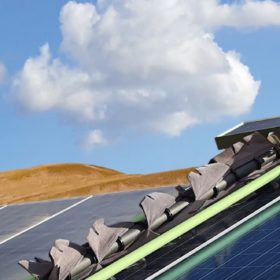
Smarter E Products: New solar module cleaning solution from Ecoppia
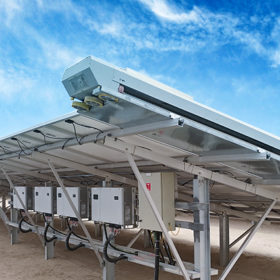
The solar cleaning system moves horizontally and cleans the panels vertically, while a patented auto-switch allows the robot to clean from either side of the module row, which the manufacturer said minimizes cleaning time. The device weighs up to 50 kg and has a cleaning speed of 22 m per minute.
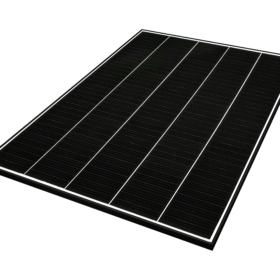
Smarter E Products: AEG launches shingled solar module with 21.1% efficiency
German electrical equipment provider AEG is launching a shingled solar module for residential and commercial installations at this year’s Smarter E event in Munich, Germany.
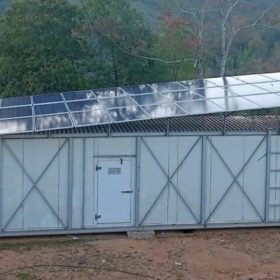
Multi-chamber solar cold storage system
India-based Inficold has developed a multi-chamber, solar-powered cold storage solution that facilitates the storage of multiple perishable commodities in different temperature-controlled chambers, all under their respective ideal storage conditions.
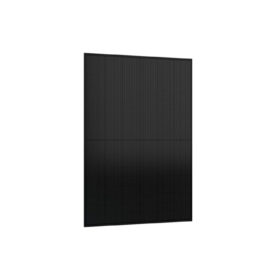
Smarter E Products: Winaico launches 410 W solar panel with 20.93% efficiency
Winaico’s new 410 W solar panels measure 1,726 mm x 1,135 mm x 35 mm and weigh 21.5 kg. They can operate with a system voltage of 1,500 and come with a 25-year product guarantee and a 25-year performance guarantee.
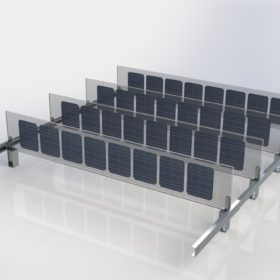
Smarter E Products: Vertical PV system for green rooftops
Norwegian startup Over Easy Solar AS is launching a vertical PV system for rooftop applications at this year’s Smarter E in Munich, Germany.
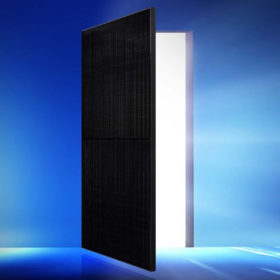
Smarter E Products: Hanwha Q Cells showcases 400 W n-type solar module with 22.3% efficiency
Hanwha’s new PV modules, designed for rooftop applications, are available in two versions: a 400 W product with a power conversion efficiency of 22.3% and a white frame, and a black 395 W module with an efficiency of 22%. For both products, the temperature coefficient is -0.30%.

Solar tech to trigger switch for skyscrapers
Energy systems have long been designed to deliver electricity to major cities from distant hubs. But now, thanks to recent advances in solar panel energy density and building-integrated PV, vertical cities could soon be standing tall under their own power.
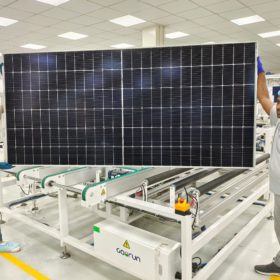
Saatvik launches 545 W bifacial PV modules
Indian manufacturer Saatvik has developed bifacial PV modules based on mono PERC, half-cut technology. The multi-busbar modules boast an efficiency rating of 21.12%.
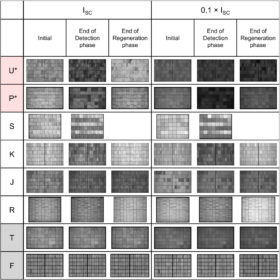
Scientists, industry players reveal plans for new LETID testing standard
An international research group has published the details of a two-year project to develop reliable ways to assess light-elevated temperature-induced degradation in operational PV modules.
Chinese PV Industry Brief: Huawei shipped 52 GW of PV inverters in 2021
In other news, Longi reported increased revenue and a slight drop in profits for the full fiscal year 2021, and heterojunction (HJT) photovoltaics manufacturer Golden Solar has leased a 250 MW production line.
