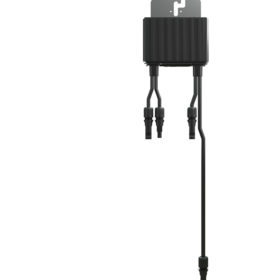
SolarEdge launches new power optimizers for residential PV
The optimizers are available in two versions that can be used with modules of up to 440 W and 500W. The devices have an efficiency of 99.5% and come with a 25-year guarantee.
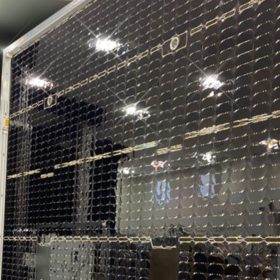
US aerospace manufacturer Rocket Lab takes over space solar cell maker Solaero
Rocket Lab has acquired space solar cell maker Solaero for $80 million. The latter operates an 11,000m2 manufacturing facility in New Mexico and produces multi-junction cells with efficiencies ranging from 29.4% to 32%.
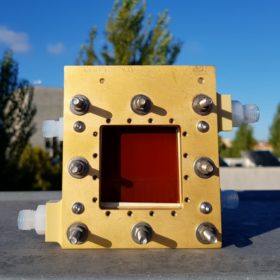
Solar redox flow cell for residential energy storage
The device was designed by scientists in Portugal to optimize light absorption by the semiconductor and ensure an effective diffusion of redox species while offering minimal electronic and ionic transport resistance. The cell has a 25cm2 photoactive area and relies on ferrocyanide/anthraquinone redox flow chemistry and a nanostructured hematite photoelectrode.

Low-bandgap GaInNAsSb solar cell for multi-junction architectures
Developed by researchers in Finland, the solar cell is intended to be used as part of lattice-matched multi-junction solar cells. It achieved a short-circuit current density of 15.2 mA/cm2 and external quantum efficiency of 0.79.

US House unanimously passes forced labor bill for China’s Xinjiang region
The Uyghur Forced Labor Prevention Act would ban all imports from China’s Xinjiang region, unless the US government determines that products were not made with forced labor. The region supplies about 50% of the world’s polysilicon, which is an essential material in solar PV.
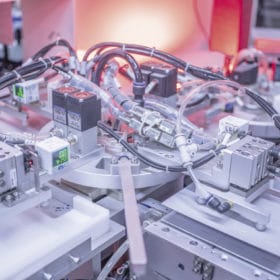
German PV equipment providers keep recovering, but uncertainties remain
German engineering association the VDMA has reported increasing orders and sales for PV equipment suppliers in the third quarter. China accounted for around 80% of PV production equipment demand during the period.
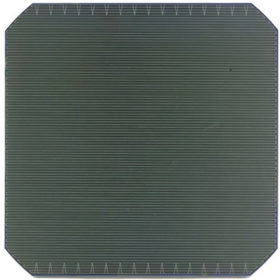
Large-area bifacial TOPCon solar cell with 23.01% efficiency
The n-type cell was built with phosphorus-doped LPCVD poly-Si passivating contacts and achieved a remarkable open-circuit voltage of 691.7 mV. According to its creators, with some adjustments the cell may be suitable for commercial production.
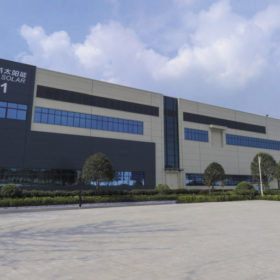
Chinese PV Industry Brief: A 20 GW wafer factory under construction and more polysilicon capacity
Fuxing New Energy is building a wafer factory in Anhui Province and Tongwei is moving forward with its plan to increase polysilicon capacity to 430,000 metric tons by the end of 2023.

Semi-transparent antimony trisulfide PV cell for solar window applications
The 5.5%-efficient cell was fabricated through a low-temperature, two-step manufacturing process that is compatible with existing window glass manufacturing technology. Cells made with 70nm antimony trisulfide films achieved the best fill factor of around 57%, while the highest power conversion efficiencies were achieved with films ranging from 70 to 100nm.
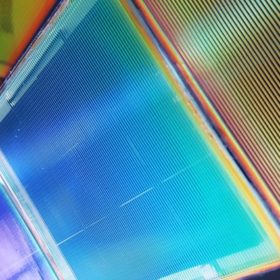
Colored optic filters for BIPV products
Dutch researchers have used optic colored filters to make building-integrated PV products more suitable for urban environments with cultural heritage value. They discovered that the filters do not affect a cell’s open-circuit voltage and fill factor, but only the short-circuit current.
