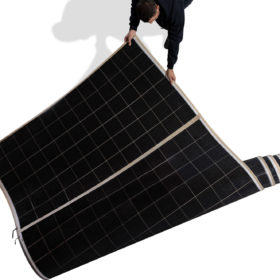
Flexible solar panels made in Israel for Amazon’s facility in France
Apollo Power is providing its flexible solar modules for a €750,000 photovoltaic project planned by Amazon in France. Each of the module units provided by the Israeli manufacturer has a size of 2,040×6,130mm and weighs in at only 3kg/m².
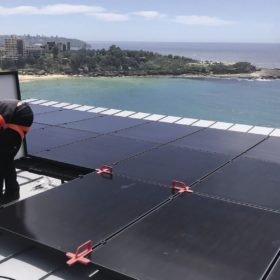
Rooftop solar price to keep rising this year
British analyst GlobalData has predicted residential and commercial rooftop panels will not return to a declining price trend until next year, with post-Covid logistics headaches the cause, rather than a polysilicon shortage.
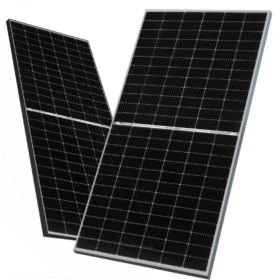
TOPCon solar modules in MENA
In a short chat with pv magazine, Mohamed Saady Dweik, the head of technical services and product management for the MENA region at JinkoSolar, spoke about the potential of TOPCon tech in the Middle East and North Africa region. According to him, the global demand for TOPCon products may exceed that of PERC panels within three years.
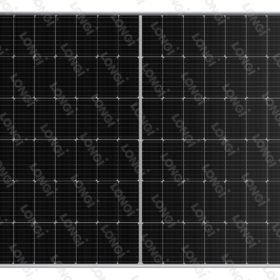
Longi unveils 415W solar panel with 21.25% efficiency
The new product is mainly intended for use in commercial and industrial solar projects. It has a size of less than 2m² and features a short-circuit current below 15A.
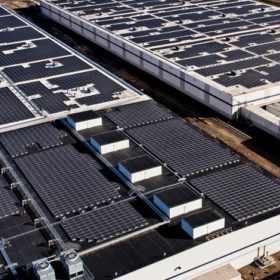
Solar power prices rising with demand
Recent BloombergNEF research shows that corporations procured a record 31GW of renewable energy in 2021, and LevelTen Energy says that growth occurred despite more than a year of price increases.
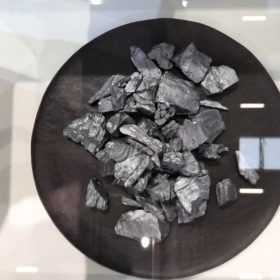
Chinese PV Industry Brief: Hoshine plans 200,000 ton poly fab
Hoshine will invest $2.75 billion in the new polysilicon factory. Elsewhere, Irico New Energy today announced a strategic co-operation agreement with PV manufacturer Jinko Solar that will see it prioritize supply of solar panel glass.

Hanwha Q Cells begins selling its solar panels based on M6 wafers in Europe
The Q Peak Duo XL-G10 panel series is based on monocrystalline ‘Qantum’ half cells and is the company’s first panel relying on M6 wafers.
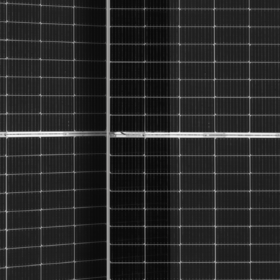
TOPCon vs PERC – a battle between fast learning curves
TOPCon solar modules will gain more market share if their average efficiency, already higher than that of PERC panels, continues to improve, according to Stefan Glunz, PV research chief at Germany’s Fraunhofer Institute for Solar Energy Systems ISE. In an upcoming pv magazine webinar on the potential of TOPCon tech, Glunz will show how to reduce costs and increase efficiency.
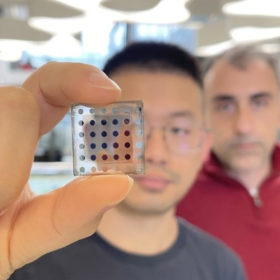
Solar cell based on silver bismuth sulfide nanocrystals achieves 9.17% efficiency
Scientists in Spain have fabricated a silver bismuth sulfide (AgBiS2) material with an absorption coefficient that is claimed to be 5-10 times greater than any other material currently used for PV technology. A cell built with these nanocrystals showed a power conversion efficiency of 9.17%, an open-circuit voltage of 0.495V, a short-circuit current of 26.75mA/cm2, and a fill factor of 63%.
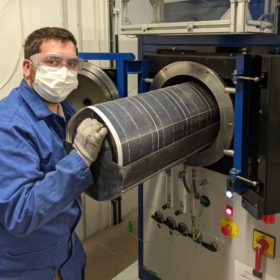
New PV module recycling tech from France
French start-up Rosi Solar has developed an industrial solution claimed to be capable of recovering high purity silicon, silver and copper contained in end-of-life PV modules. The company’s technology is based on a pyrolysis process that makes it possible to isolate the different metals from the cells.
