
Plastic for solar panels?
Three companies are swapping out aluminum and glass in favor of plastic to save weight and add flexibility. We look at the pros and cons.
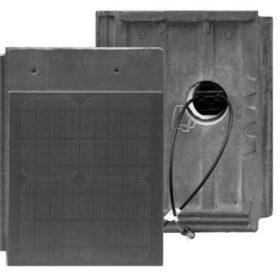
Solar tile with 19.22% efficiency from Canada
The solar tile has a power output of 15 W and is recommended for flat concrete roof tiles. It can operate with a maximum system voltage of 600 V.
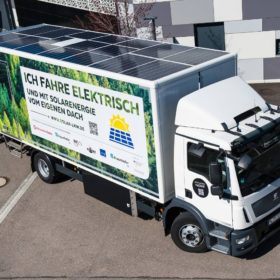
Vehicle-integrated PV for heavy-duty trucks
A German consortium is testing an 18-ton electric truck covered with a 3.5 kW PV system. The solar modules were designed by scientists at the Fraunhofer ISE and produced by German manufacturer Sunset Energietechnik GmbH. The panels are equipped with a special separation device that is able to disconnect the panels in case of an accident.

Flowable silicone sealant to repair damaged solar module backsheets
The special sealant is based on a product developed by U.S.-based Dow Corning for solar panel frame sealing. Its creators claim the new solution is able to make damaged panels recover high insulation resistance and operate normally.
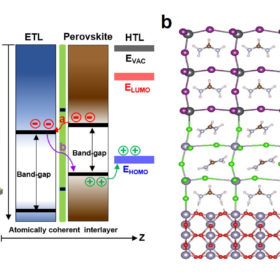
Korean researchers achieve 25.8% efficiency for single junction perovskite solar cell
The record efficiency was obtained thanks to an interlayer placed between the electron-transporting layer and the perovskite layer, which eliminated the need for passivation. The cell was also able to retain around 90% of its initial efficiency after 500 hours under standard illumination.
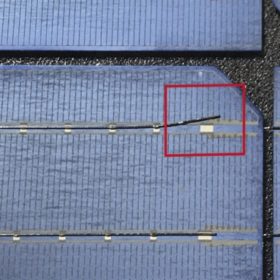
The weekend read: Hidden PV module traps
Frédéric Dross of STS shares the minor yet essential details that buyers must pay close attention to when finalizing PV module purchase agreements, based on the company’s experience advising clients across the globe. Avoiding hidden traps in purchase agreements comes down to detailed contractual knowledge, fine print, and understanding common practices to bypass strict controls.

China PV Industry Brief: Installations slow, deals continue despite rising prices
This week saw prices in the polysilicon segment, and further downstream, rise again, with no end in sign. National Energy Agency statistics show a slowdown in installations for the second consecutive month in September. Manufacturers, however, continue to purchase components and materials in the expectation that prices will rise even further.

Nexwafe closes financing round with €32 million
Innovative solar wafer company Nexwafe has closed its latest financing round with €32 million. The round was lead by the Indian group Reliance, which contributed €25 million to the round. The Freiburg-based wafer manufacturer intends to use the funds to drive forward the production and commercialization of its kerfless PV wafers.

DNV puts different module formats to the test
Energy consultancy DNV was tasked by module manufacturing giant Longi Solar with comparing the balance of systems costs between modules utilizing 182mm and 210mm wafers, based on a 3.7 MW project in three different layouts. The results reveal a slim cost advantage for the smaller of the two, based on both fixed tilt and tracker systems.
Big modules head for standardization
PV manufacturing giant Trina Solar says it has agreed with other industry players on a set of standard dimensions and other technical specifications for PV modules utilizing 210mm wafers – the largest currently available on the market. The manufacturer says it expects the China Photovoltaic Industry Association to formally release the standard before the end of October.
