
PV-powered mobile home with 730km range
Solar Team Eindhoven has developed an experimental mobile house that is powered exclusively by vehicle-integrated PV and is claimed to achieve a range of 730km, on a sunny day and at a, moderate speed of up to 85kph. The vehicle is equipped with a foldable PV system that can be unfolded and produce more power when the vehicle is not in motion.
Legal dispute over South African content rules in 2 GW tech-neutral tender
The South African Department of Mineral Resources launched a tech-neutral procurement process for 2 GW of capacity in August 2020, in response to a chronic short-term electricity supply gap in the country.
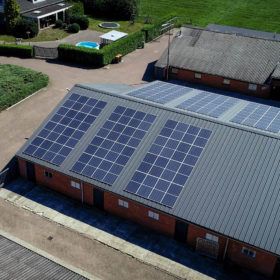
Dutch construction company invests in 300 MW solar module factory
The factory is under development in Eindhoven by Dutch start-up Solarge, and is scheduled to begin manufacturing activities in March.
SDN opens heterojunction module factory in South Korea
Planned to be located in Gwangju, in southwestern Korea, the new factory is expected to reach a capacity of 385 MW and to produce 550 W panels.

Indian PV manufacturer expands panel capacity with new 700 MW factory
Insolation Energy Director Vikas Jain recently spoke to pv magazine about the company’s plans to expand its solar panel manufacturing capacity to 700 MW with the addition of a 500 MW facility. The new factory will be equipped to produce poly, mono, mono PERC, and bifacial panels, with individual outputs of up to 600 Wp.

Price increases hit US solar as trade uncertainties with China cloud growth goals
Price increases, supply chain disruptions, and a series of trade risks are threatening the U.S.’s ability to decarbonize the grid, warned SEIA president and CEO Abigail Ross Hopper.

Is it time for the world to start thinking about 1.7C?
A note issued by Norwegian analyst Rystad has hinted it may be time to consider abandoning the 1.5-degree average global temperature rise ceiling agreed upon in Paris six years ago, because the world will never be able to pump out enough solar panels in time.
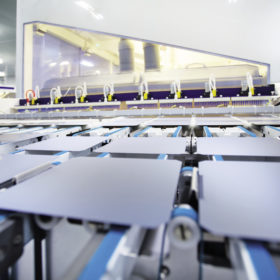
Chinese PV Industry Brief: Rising wafer prices and a big tracker order
AntaiSolar has secured a 400 MW contract from Ningxia Jiayang Energy and Longi has raised the prices of all its wafers. Elsewhere, GCL New Energy has announced the sale of another 198 MW of project capacity.
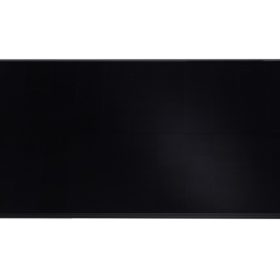
Solaria unveils 430 W pure black residential solar panel
The new residential module of the U.S.-based manufacturer has a power conversion efficiency of 20.40%, a size of 1,076×1,957x35mm, and a weight of 21.3kg. The product is claimed to be compatible with next-generation, module-level power electronics.

Antimony trisulfide solar cell with 5.84% efficiency
The cell was fabricated by adding a special additive that improves the low crystallinity and high resistivity of the antimony trisulfide film. On top of the improved efficiency, the device showed an open-circuit voltage of 0.62 V, a short-circuit current density of 15.85 mA/cm2 and a fill factor of 59.61%.
