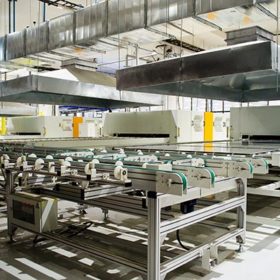
Tata Power to set up 4 GW vertically integrated solar factory in India
The Indian company is planning to invest INR 3,000 crore ($403 million) in the new manufacturing facility.
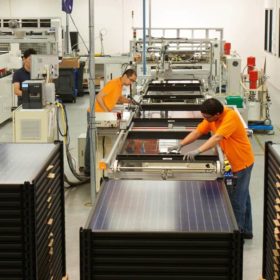
Australian solar manufacturers respond to country-wide stock shortfalls
As Australia, like much of the world, battles with shortfalls in supply as solar module prices rise and Chinese companies’ stocks decrease, the country’s only manufacturer, Tindo Solar, has opted to release emergency stocks. Likewise, Chinese giant Longi is working to guarantee supply for Australia, saying its vertical integration has afforded it extra security.
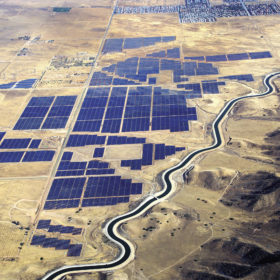
Chinese PV Industry Brief: China National Petroleum Company builds 200 MW solar park
Elsewhere, Longi has announced it has secured a wafer supply deal from Zhejiang-based TOPCon module manufacturer Dal Solar, and glassmaker Irico New Energy is planning an initial public offering.
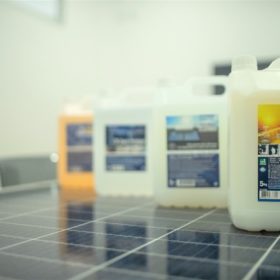
Detergent for solar module cleaning and protection
Developed and distributed by Portuguese start-up ChemiTek, the detergent is claimed to reduce water consumption by about 50% and increase energy production by up to 5%. The product was recently certified by the German laboratory TÜV Sud, according to the EN 61215 standard.

African Energy Week highlights lack of support for renewables
The closing day of the African Energy Week event held in South Africa this month heard voices casting doubt on a renewables-only energy transition and calling for a gradual change and continued investment in petrochemical production.
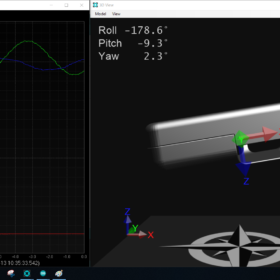
Simulation tool to measure effect of waves on offshore floating solar
Developed by scientists in Malta, the tool is said to predict yield gains or losses that waves can determine in offshore PV installations. The research group identified three movements an offshore array can be subject to, and for each of them provided specific measurements.
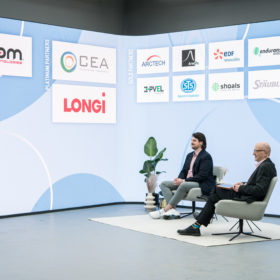
Roundtables USA: Accelerating solar deployment – video now available
Industry leaders, policymakers, and stakeholders joined pv magazine senior editors in an insight-packed live event to discuss optimizing solar PV and accelerating deployment across the U.S. and the globe.
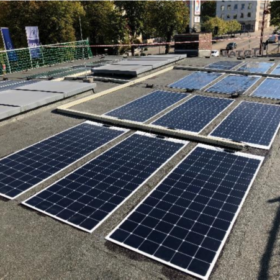
As Maxeon waits on potential U.S.-based solar cell fab, it launches Air panels in Europe
Maxeon exec Mark Babcock joined pv magazine to talk about Maxeon’s Air solar panels, and the company’s possible U.S. manufacturing expansion.
Austrian solar module manufactuer Energetica files for insolvency
The company had started manufacturing activities at its factory in Liebenfels in November 2019. It wants now to start a restructuring process.

First Solar signs multi-year deals for 5.4 GW of modules
Lightsource bp and bp placed orders for around 4.4 GW of modules, with options for an additional 1 GW.
