
France Solar enters liquidation
French solar installer France Solar has entered liquidation after failing to secure a buyer, following its placement in receivership on April 28.
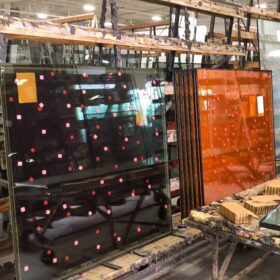
First Solar to use quantum dots to boost module efficiency
Quantum dot technology promises to boost bifacial solar module output. The company entered into a supply agreement with specialist UbiQD.

Longi unveils 34.58%-efficient tandem perovskite-silicon solar cell based on asymmetric self-assembled monolayer
In a new scientific paper published in nature, the Chinese manufacturer presented a new tandem perovskite-silicon solar cell based on a bottom cell with a heterojunction design. It also used a new type of self-assembled monolayer that reportedly reduces non-radiative recombination and increases cell efficiency.

EU expresses reluctance on opex support for solar, cleantech manufacturers
The European Commission has told pv magazine that it will unlikely prioritize operating expenditure (opex) support for solar and clean technology manufacturers, citing concerns about potential market distortion, even as insolvencies rise across the European PV sector.

What standards for agrivoltaics?
The technology which combines solar PV panels and agriculture is gaining ground. IEC Standards for solar photovoltaic (PV) systems already exist, but more might be required, dealing with some of the more specific issues relating to agriculture.
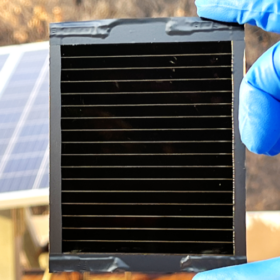
Chinese researchers build 21.60%-efficient perovskite solar modules via blade coating
A research team led by the Dalian Institute of Chemical Physics in China have used tetramethylammonium chloride in the fabrication of perovskite solar cells and modules, demonstrating that it improved both stability and efficiency results. The group’s 10 cm × 8 cm modules achieved certified 21.60% power conversion efficiency. The novel interfacial modification enabled the use of scalable blade coating to deposit both transport layers and the perovskite layer.

Collision of art, culture and solar sets Guinness World Record
A residential building’s vibrant, art-drenched solar façade brought renewable energy to new heights, setting a Guinness Book of World Record for the largest solar panel mural.
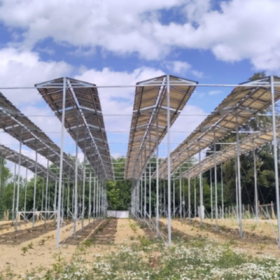
Fraunhofer ISE estimates Germany’s agrivoltaic potential at 500 GW
Fraunhofer Institute for Solar Energy Systems (ISE) says Germany could deploy up to 500 GW of agrivoltaic capacity, based on a nationwide assessment of all agricultural land types and site suitability criteria.

Solarix Solar launches new terracotta solar panel
The Netherlands-based solar façade panel and mounting system provider has added a new terracotta rooftop module to its product range. It also announced it is expanding it sales network and boosting its manufacturing capacity after raising €5.5 million in financing.
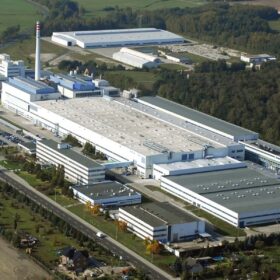
German solar glass maker GMB files for insolvency
German solar glass manufacturer Glasmanufaktur Brandenburg GmbH has filed for insolvency, affecting 247 employees at its Tschernitz facility, according to multiple media reports.
