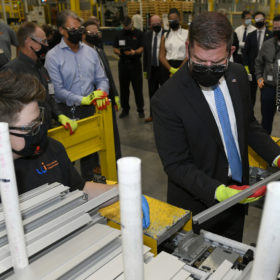
First Solar breaks ground on 3.3 GW module factory
First Solar has started building a new PV module factory in the U.S. state of Ohio. The $680 million facility is scheduled to start operations in the first half of 2023.

Solar modules are being detained by US customs agents, reports suggest
An order issued in late June instructed US customs agents to detain solar shipments containing silica-based products sourced from a Chinese firm and its subsidiaries. Three solar players may already have been impacted.

Chinese PV Industry Brief: Work begins on 12 GW heterojunction module factory in Zhejiang
Furthermore, Zhonghuan Semiconductor’s parent company has reported strong results for its PV business and solar developer Shunfeng has halted trading in its shares.
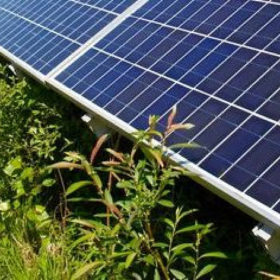
Cooling PV modules with plants, coir pith
An Indian-Malaysian research group has investigated the effectiveness of several passive cooling techniques for solar panels, including the placement of plants around the modules or coir pith underneath them, both of which, surprisingly, offered good performance in terms of temperature reduction and power yield.

New PV facade design in Sweden
Soltech Energy has installed a 60 kW solar facade on the wall of a garage in Sweden that hosts 300 EV-charging posts. It features a steel structure to facilitate the flow of air.

Solar tariffs to be pegged to coal-fired power prices in grid-parity China
Solar glassmaker Xinyi reported Beijing’s plans as it outlined bumper first-half returns whilst warning investors the boost in glass prices seen last year is likely to be short-lived.

JinkoSolar builds 7 GW wafer factory in Vietnam
The new factory should begin production within six months and serve the company’s cell and module assembly factories in Malaysia, as well as the module assembly facility in the United States.
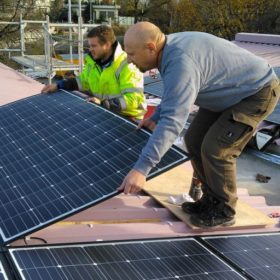
Energy transition to create 60m solar jobs by 2050
The switch from fossil fuels and nuclear will bring a jobs dividend thanks to the greater labor-intensity of renewables plants, according to a paper published by Finland’s LUT. However, the jobs dividend is unlikely to be evenly spread around the world, with Europe set to be a big winner.
Taiwan’s URE Corp deploys production line for M6, M8 solar modules
The new capacity is expected to meet domestic solar module demand, which the PV manufacturer expects will significantly increase in the second half of this year.
Palestine launches tender for 20 MW solar module assembly line
The line will be used in a new PV panel assembly factory located in the West Bank of Palestine which is set to begin manufacturing activities next year.
