
Nextracker acquires Origami Solar for $53 million
Nextracker has acquired US steel solar frame maker Origami Solar for $53 million, expanding into panel frame production to accelerate installations, support local supply chains and improve system durability.

Solar, wave-powered uncrewed vehicle for marine monitoring
UK-based Autonaut offers wave-propelled and solar PV-powered drones capable of data collection at sea for several months at a time.

Canadian Solar presents 660 W ‘low-carbon’ heterojunction module with 24.4% efficiency
The new products are available in nine versions with power output ranging from 620 W to 660 W and power conversion efficiency spanning from 23.0% to 24.4%. Canadian Solar said the panels have a carbon footprint of 285 kg CO₂eq/kW, which is reportedly one of the lowest among all silicon-based solar modules worldwide.

Solarcleano launches panel cleaning robot for large PV installations, trackers
The Luxembourg startup’s newest product is a portable, dry and wet cleaning system with 2.45 m wide brushes, designed to be operated by a single person.

EIA to cancel US solar module shipment report after review
The US Energy Information Administration (EIA) has proposed ending its solar module shipment report, citing limited value compared with reporting burdens.
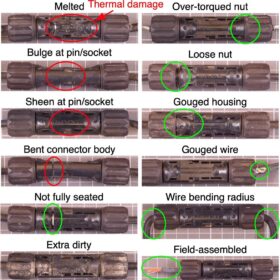
Analysis of 6,276 connectors for rooftop PV systems
Sandia National Labs researchers have created a new dataset on the rates and types of rooftop PV connector failures. Their analysis has shown that tight wire bending radius, extra dirty connectors, and loose nuts are the most common failure causes in 6,276 connectors deployed between 2014 and 2017 across seven U.S. regions.

Avaada Electro unveils n-type TOPCon PV modules
Avaada Electro, the solar manufacturing arm of Avaada Group is presenting its n-type G12, G12R and M10L tunnel oxide passivated contact (TOPCon) solar modules at the RE+ 2025 trade show in Las Vegas.

First Graphene claims major boost for perovskite solar cell efficiency
Australian graphene supplier First Graphene has reported the addition of its functionalized graphene product to perovskite solar cells has increased efficiency almost two-fold and reduced production costs by up to 80%.
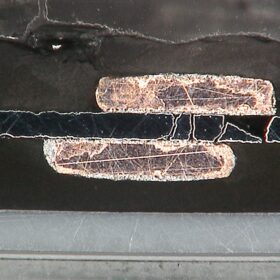
Investigating solar glass quality for recycling in new glass products
A team of Japanese scientists explored how typical PV panel component materials affect the ability to re-use end-of-life PV cover glass. Specifically, they measured contamination by materials, such as aluminum, silicon, carbon, and copper, and their effects in melted PV panel glass cullet.

Chinese PV Industry Brief: Top solar module makers report H1 losses
Longi, JinkoSolar, JA Solar and Trina Solar have reported net losses for the first half of 2025, as revenue fell despite strong shipments of high-efficiency modules and storage systems.
