
The weekend read: Bifacial drives PV encapsulant switch
Suppliers of encapsulant materials – plastic sheets that are heated to laminate together the components in PV module stacks – are rapidly expanding to keep pace with module manufacturing in Asia and other parts of the world. Ethylene-vinyl acetate (EVA) continues to dominate the market, but new developments in module technology are driving a slow shift to more costly polyolefins.

PV-thermal technology earns tick of approval from IEA
Solar module developers have long recognised the detrimental effects heat has on cell performance but West Australian company Sunovate has pointed to solar PV-thermal (PVT) technology as an opportunity to value add by improving efficiency.

Chinese PV Industry Brief: Work begins on 50 GW wafer factory, Shanghai Electric bets on green hydrogen
Tianjin Zhonghuan Semiconductor began building its new wafer manufacturing facility in the Ningxia Hui autonomous region. Shanghai Electric is setting up a hydrogen research center with the Dalian Institute of Chemical Physics of the Chinese Academy of Sciences.

‘Falling solar module costs are behind us’
Canadian Solar is pivoting towards energy storage and is preparing to IPO its manufacturing and Chinese solar project activity in China, under the CSI Solar operation, by July.

Romania’s first module factory
Romanian manufacturer Karpat Solar has acquired a 100 MW panel production line from Spanish provider Mondragon. The manufacturing facility will be located in Transylvania.
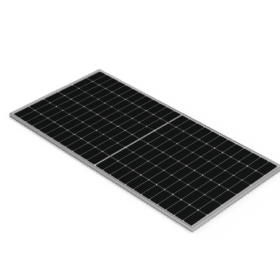
Bisol launches half-cut module with multi-busbar tech
The new panel was conceived for applications in the rooftop segment. It features an efficiency of up to 20.5% and a power rating of 360/455 W. The Slovenian module manufacturer used 166×166 mm wafers for the new product, as it claims they currently provide the best power and size ratio.

Solargiga board expects annual loss
The directors said the company’s shuttering of solar cell manufacturing–prompted by aging production equipment and a lack of scale–were unexpected.

Holographic film to protect solar panels from overheating
Russian scientists have developed a holographic film based on prismatic concentrators that reduces the operating temperature of solar panels, including thermal-photovoltaic devices. They claim the patented, low-cost technique can even improve PV module efficiency in cloudy weather.

Organic PV module with 12.36% efficiency
Chinese researchers have taken a quaternary approach to fabricate a module with an area of 19.34 cm2, a geometrical filling factor of 95.5%, and an efficiency of 12.36%.
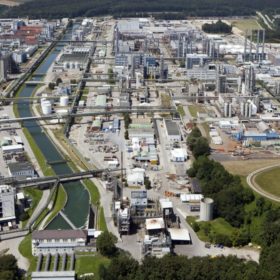
Wacker reports slight revenue growth for polysilicon business
The German polysilicon manufacturer reported higher sales volumes and a better product mix for its polysilicon segment.
