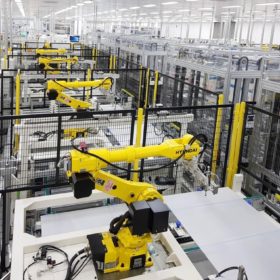
Hyundai builds 1.37 GW solar cell factory in South Korea
The first 650 MW production line will be deployed by the end of June. The cells produced at the manufacturing facility will be used exclusively for Hyundai’s module production.

Meyer Burger to start PV cell, module production in May
Swiss solar manufacturer Meyer Burger is now looking for people to work at its new factories in Freiberg and Bitterfeld-Wolfen, Germany. The two facilities are scheduled to start production in May.
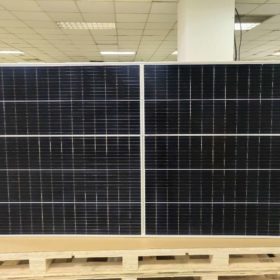
Trina launches 670 W solar panel
The latest product in the Vertex series from the Chinese manufacturer has a power conversion efficiency of 21.6%.
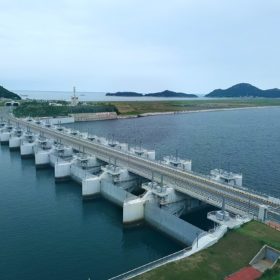
Hanwha Q Cells secures 300 MW order for 2.1 GW floating complex in South Korea
The Korean manufacturer was chosen as a preferred bidder for a portion of the Saemangeum solar complex. The company will likely supply its special panels for floating PV for the project.

Korean poly maker’s figures dragged down by idled production lines
The Covid-19 pandemic helped ensure chemicals business OCI could not put its idled polysilicon lines in Gunsan back into use last year, as had been hoped, prompting another hefty assets impairment which weighed on the group even as it expects supply of the raw material to be kept tight by rising demand.

Polysilicon maker Daqo presents another set of blockbuster figures
A planned IPO of the Chinese company’s main, Xinjiang business unit is set to finance construction of another 35,000 metric tons of annual production capacity by this time next year even as soaring sales volumes in 2020 enabled Daqo to pay down the bill for its previous expansion.
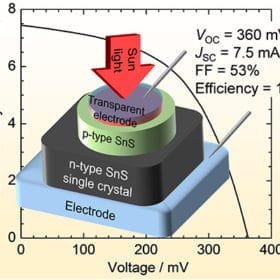
Japanese researchers build tin(II) sulfide solar cell with high open-circuit voltage
The single-junction cell has a conversion efficiency of only 1.4%, but its creators claim it may easily reach between 4 and 5%, when properly optimized. The device also showed a remarkable open-circuit voltage of 360 mV, which the scientists described as the highest VOC value ever reached for SnS‐based heterojunction solar cells.

India to levy 40% customs duties on imported solar modules from April 2022
The finance ministry has approved the proposal to levy the duty next year. Customs notification of the move will be issued at a later date.

III-V multi-junction solar cell with 39% efficiency
Finnish scientists have developed a four-junction solar cell based on III-V semiconductor materials that is said to be able to achieve a wide spectral coverage. The cell was monolithically grown on gallium arsenide by molecular beam epitaxy (MBE).

Focus on temperature to reduce LCOE, says new study
A new model to assess the role of module temperature in PV power plant economics, developed by scientists in Saudi Arabia, finds that keeping modules cool could be an even more effective strategy to increasing energy yield than pursuing further gains in cell efficiency. The model finds that reducing module temperature by three degrees has a similar impact on energy yield to a 1% increase in conversion efficiency.
