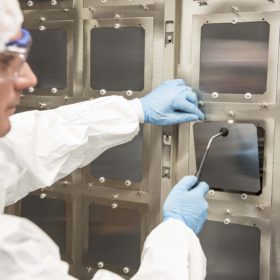
Oxford PV retakes tandem cell efficiency record
Perovskite developer Oxford PV has set a new world record for perovskite-silicon tandem cell efficiency at 29.52%, edging out the previous record set less than a year ago by Helmholtz Zentrum Berlin. The new record has been certified by the U.S. National Renewable Energy Laboratory.
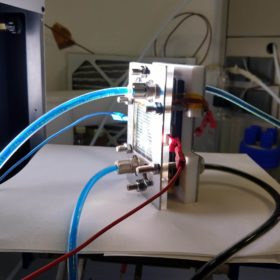
Vanadium redox flow battery integrating CIGS modules
Spanish and Finnish scientists have developed a solar vanadium redox flow battery paired with commercially available CIGS solar panels. The open-circuit voltage values were high enough to achieve unbiased photocharge, they said.

Chinese PV Industry Brief: Beijing wants to loosen restrictions on glass
Furthermore, Chinese manufacturers JA Solar and Akcome both want to add 6 GW of manufacturing capacity to their respective panel production operations. Trina and Tongwei will jointly deploy another 15 GW of ingot capacity.

Solar noise barriers require high self-consumption rates
Dutch contractor Heijmans has deployed a solar noise barrier to test three different PV module technologies, including cadmium telluride, CIGS, and crystalline products. Initial analysis has shown unexpectedly low returns, due to the rates at which the installation is selling power to the grid. But high levels of self-consumption could make such designs competitive with conventional noise barriers.
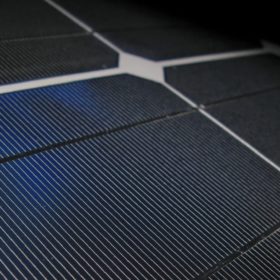
Water harvesting tech for PV panel cleaning and cooling
An international research team has proposed to use nighttime radiative cooling to harvest water from PV panels and reuse it for module cleaning during the daytime. According to their findings, the proposed system has, also, a beneficial effect on the modules’ operating temperature.

Another decade of PERC
A new paper from scientists at Germany’s Fraunhofer Institute for Solar Energy Systems (ISE) examines the entire history of PERC technology, from its beginnings in laboratories more than 40 years ago to today, where it represents the majority of all PV cell production. And this story is far from over, as ISE lays out a pathway to efficiencies of 26% as well as use as the bottom cell in a tandem device that it believes will keep PERC technology in mass production to 2030 and beyond.

Chinese PV Industry Brief: 6 GW wind-solar-storage project in Inner Mongolia and a 5 GW cell factory in Fujian
A huge renewable energy complex is planned to include 5 GW of PV capacity. Furthermore, the State Power Investment Corporation has announced a plan to set up a 5 GW heterojunction solar cell factory in Fujian province.

Colored facade solar panels with 13.8% efficiency
Dutch startup Solarix has developed a new line of facade solar panels featuring 13.8% efficiency and output ranging from 110 to 180 W, depending on the module size and color. The panels can be bolted or glued onto aluminum mounting systems applied to facades.

Extreme weather causing US solar insurance premiums to explode
Catastrophic weather events in Texas and California have led to steep increases in insurance premium costs, according to a new analysis by Norton Rose Fulbright.
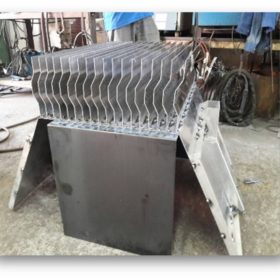
Solar module passive cooling with lapping fins
Malaysian researchers have proposed a new passive technology for solar module cooling based on fin heat sinks. The tech ensures lower PV system payback times and reduces operating module temperatures by up to 26 C.
