
New solar trade cases focus on Asian countries
A US solar manufacturing group has filed trade petitions targeting cell and module imports from Indonesia, India and Laos, seeking antidumping and countervailing duties on largely Chinese-produced products. The action could trigger new AD/CVD investigations by the US Department of Commerce.
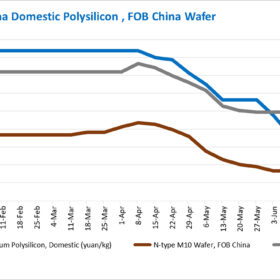
China’s upstream solar market signals strong price gains amid government intervention
In a new weekly update for pv magazine, OPIS, a Dow Jones company, provides a quick look at the main price trends in the global PV industry.
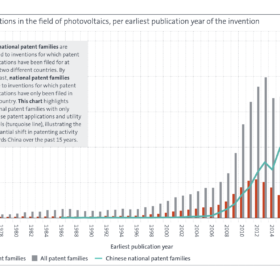
Photovoltaic inventions increased seventeen-fold in three decades
The European Patent Office says China has overtaken other countries in photovoltaic patent filings over the past 15 years, while European startups and universities retain a lead in agrivoltaics and niche solar applications.
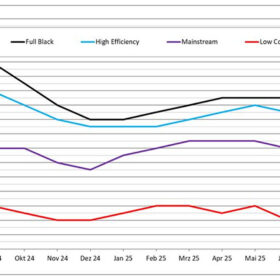
Solar module prices on a clear downward trend
PV module prices have fallen by around 5% to 8% across all technology classes in recent weeks. says Martin Schachinger, the founder of pvXchange.com. This means that prices are moving strongly back toward the level we saw at the beginning of the year, which can only be described as unhealthy for module producers.

Germany concludes rooftop PV tender with average price of €0.0922/kWh
The German authorities have selected 118 MW projects totaling 255 MW in the nation’s latest rooftop PV tender.

Sinovoltaics maps 68.4 GW of solar module capacity in India
The latest Sinovoltaics solar supply chain report about PV manufacturing in India indicates module capacity of 68.4 GW, cell capacity at 24.5 GW, and ingots at 14 GW, with continued growth planned to 2030.
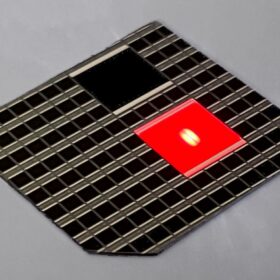
Fraunhofer ISE achieves 40% efficiency for indoor III-V solar cell
The PV device is based on a indium gallium phosphide absorber with an energy bandgap of 1.9 eV. It is intended for use in autonomous Internet of Things (IoT) applications that operate indoors without an external wired power supply.
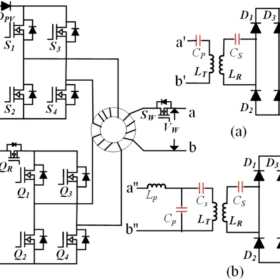
Wireless EV charging based on PV, three-port DC–DC converter
Scientists have developed a wireless charging system for electric vehicles, with a three-port DC–DC converter at its core. They have simulated the system and tested a prototype in their lab and have found it achieved an improved efficiency of 88%.
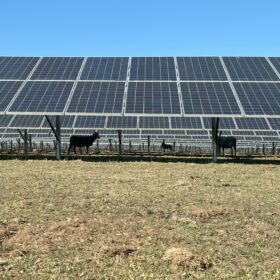
Solar myths and misconceptions
In a new monthly column for pv magazine, the International Solar Energy Society (ISES) debunks old and new urban legends about solar energy.

ClearVue BIPV solution achieves 2.6-year payback in Hong Kong trial
ClearVue Technologies says its solar facade solutions, that combine the company’s solar glazing units into a fully integrated energy generating building envelope, have achieved a payback period of less than three years in a Hong Kong government trial.
