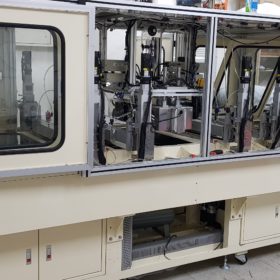
New production equipment for large-area perovskite solar cells
National Taiwan University and Taiwanese PV production equipment provider E-Sun Precision Industrial Co. have developed equipment to produce different kinds of perovskite cells with varying chemical compositions. The first trials achieved 14.3% conversion efficiency rates.
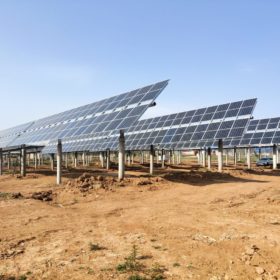
Trina Solar launches TrinaPro Mega ultra-high-power PV solution
As the solar industry starts to embrace ultra-high-efficiency modules, the Chinese PV heavyweight has unveiled TrinaPro Mega, the first integrated solar system in the world that incorporates 500 W+ modules.
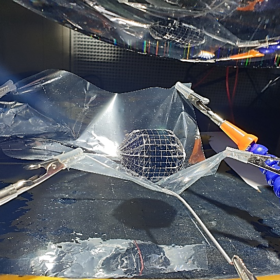
Spherical monocrystalline solar cells with 18.93% efficiency
The spherical 3D cells can reportedly generate around 101% more power than conventional flat solar cells. Measurements have also shown that the spherical cells provide a 10% lower maximum temperature compared to flat cells, while accumulating less dust.

US module shipments spiked in quantity, plunged in price amid pandemic
Manufacturers shipped about 2.05 GW of PV modules in March, before plummeting to 1.24 GW in April. But while shipments slowed, the cost per watt peak reached a record low.

Hanwha Q-Cells wins patent litigation against JinkoSolar, REC Solar and Longi in Germany
The Düsseldorf Regional Court has agreed rivals of the Korean manufacturer illegally used its patented passivation technology. The judges granted Hanwha Q-Cells an injunction which requires Jinko, REC and Longi to retrieve all modules featuring the patented technology distributed in Germany since late January last year. Hanwha can also opt to have the offending products destroyed.

Scientists in China give flexible perovskites a backbone
A team of researchers led by Nanchang University in China trialed a polymer based hole transport layer to flexible perovskite solar cells, using a glue to attach it to the active perovskite. The team was able to assemble the 19.87%-efficient cells into a small flexible module suitable for wearable solar applications, and says its design was inspired by the structure and movements of human vertebrae.

Another billion-dollar quarter for JinkoSolar
Despite the challenges to both the manufacturing and shipment of its products during the period, JinkoSolar today reported that it shipped 3.4 GW of modules in the first quarter of 2020, bringing its revenue for the quarter just over the billion dollar mark.
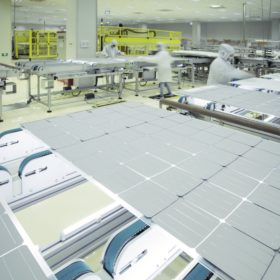
Analyst expects ‘unprecedented’ consolidation of Chinese solar industry
PV manufacturers unable to live with proposed new quality guidelines and project developers alike are set to be squeezed out by the state in the world’s biggest solar market, according to Frank Haugwitz, who has compiled a market update as preparations for the next five-year plan gather pace.
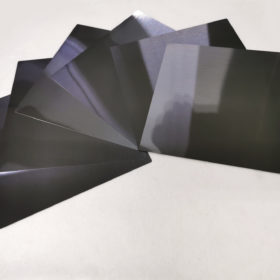
The weekend read: Gallium in the fight against LID
From the acquisition of IP to commercialization, the PV industry has witnessed a rapid rise of gallium-doped silicon. Researchers are testing the resulting cells’ stability while industry has begun the manufacturing phase. All this leads to a key question: Will gallium doped silicon solar modules will be the next big thing?
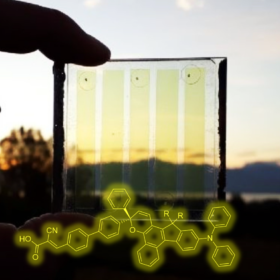
Semi-transparent mini BIPV panels for solar windows
European scientists have developed mini modules with an active area of 14 cm² and a 3.68% efficiency rating. The panels also have a self-adjusting feature that can help to mitigate the amount of light when they are exposed to full sunlight, or to the temperatures of buildings with large windows and/or glass facades.
