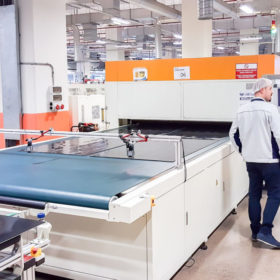
Solar module quality control measures in an age of Covid-19
Asier Ukar, director of the Spanish unit of German technical advisory PI Berlin, tells pv magazine about his experiences of conducting quality control inspections in Chinese factories during the global pandemic.

Solar driving efficient electrochemical water treatment
Researchers from the United States have investigated how solar could help electrochemical methods for water treatment become more competitive. The scientists analyzed how electrochemical technologies such as electrocoagulation, capacitive deionization, electrodialysis, and electrodeionization may be combined with solar power generation.
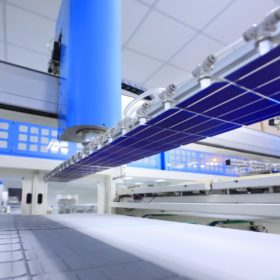
Seraphim launches 440 W shingled module
The half-cell module has a 20.81% efficiency and is composed of 158.75 mm mono PERC cells.
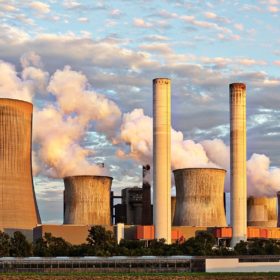
Covid-19 weekly briefing: Evidence abounds of renewable energy gains at the expense of fossil fuels as the clamor for a green recovery rises
Portugal set a new coal-free record because of the pandemic as Belgium and Israel moved to help the renewables industry. But there was grim news in Mexico and Turkey, and Bangladeshi clean energy firms have appealed for more assistance.

SunPower accesses $1bn in residential solar and storage loan capital from credit union
The cash injection from Tech CU will fund the installation of ‘tens of thousands’ of the Californian manufacturer’s solar panels on residential rooftops over four years, according to the company.
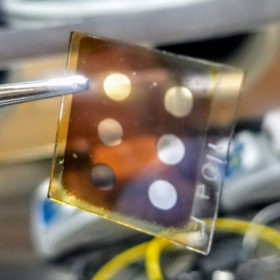
A flexible perovskite solar cell with 11.8% efficiency
U.S. researchers have created an inorganic mixed halide perovskite solar cell which they claim shows no thermal degradation even at 200 degrees Celsius for three days. The device can be used in tandem junction cells and is designed for use in real-life environments with high solar irradiation.
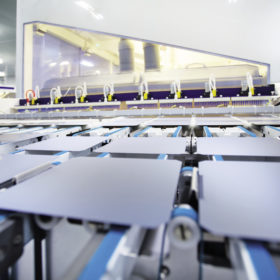
Chinese PV Industry Brief: Financials, a new GW-scale factory, and big hydrogen
Longi and Sungrow both announced solid financial results last week. Module maker China Solar delayed the resumption of trading on the Hong Kong stock exchange, and polysilicon producer GCL-Poly unveiled plans to raise up to US$16.8 million by issuing shares. Coal miner Baofeng Energy, meanwhile, announced the construction of what it claims will be the world’s largest PV-powered hydrogen plant, and Seraphim and Lu’An Solar revealed that they will open a 5 GW PV panel factory in China’s Jiangsu province.

Bangladeshi solar module companies seek Covid-19 stimulus package
Industry representatives call for a $59 million, five-year package of grants, loans and tax incentives from the government after Dhaka extended a coronavirus-driven industrial shutdown into the middle of the month.
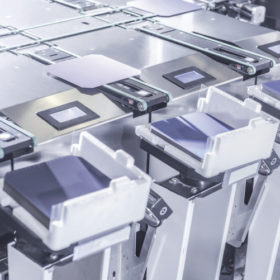
Meyer Burger mulls gigawatt-scale German solar fab
Chief executive Gunter Erfurt told a German radio station a solar factory in North Rhine-Westphalia could supply high-efficiency panels for a 10 GW floating solar project on the vast Hambach open-cast coal mine.
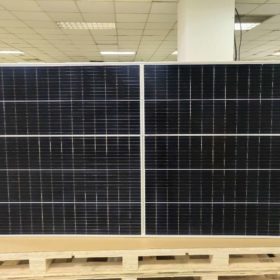
Trina secures 105 MW order for its 500 W modules
The Chinese manufacturer will provide Indian developer SunSource Energy with its Vertex panels. Shipments will be made in the fourth quarter.
