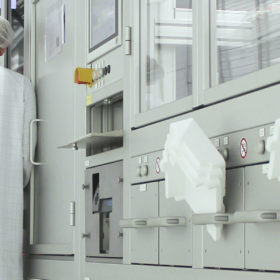
Interview: Designing circular solar modules
Amid a growing appetite for sustainability from customers, Lithuanian solar panel maker Solitek is applying circular principles to its production operations. Measures include embracing digitalization and new approaches to design. Project manager Tadas Radavičius has spoken to pv magazine about the company’s work and how Solitek is supporting European projects which are considering circular solar.
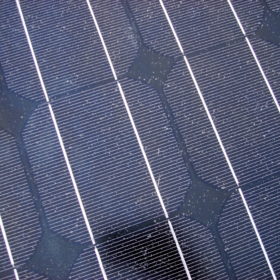
IBC solar cell with 25% efficiency
Australian researchers have revealed a new cell that builds on an earlier 24.4%-efficient device. The upgrade was achieved with an oxide-nitride-oxide passivation stack which optimized diffusion and contact-area fraction, plus improved texturing with a monoTEX surfactant.
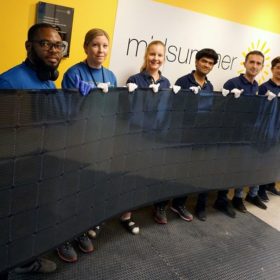
Midsummer unveils 500 W rooftop panel
The Swedish PV equipment supplier has launched Midsummer Magnum, a solar module for large rooftops. The manufacturer says the panel offers 14.54% efficiency and an output of 128.3 W per square meter. The company also unveiled a manufacturing process it claims can increase module output 10%.
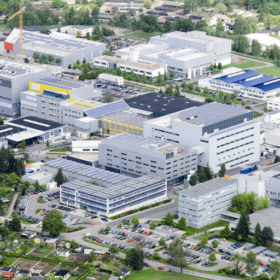
Meyer Burger reveals locations for new cell, module plants in Germany
Production of highly efficient solar cells and modules will start at two sites in Germany from the first half of 2021. The Swiss tech group plans to eventually expand annual production to 5 GW.
Interview: How a German startup aims to alleviate energy poverty with circular solar solutions
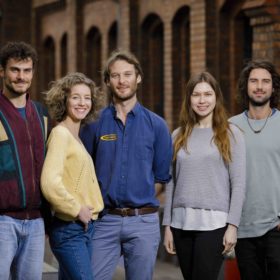
SunCrafter is a small German startup with a global ambition: to alleviate energy poverty by upcycling used solar PV modules. Having established an innovative business model, which sees it subsidizing its goals by meeting the infrastructure needs of big events and festivals, it has now partnered with EU-funded project Circusol to demonstrate the viability of circular renewables. pv magazine interviewed SunCrafter CEO and co-founder Lisa Wendzich as part of the UP initiative’s circular manufacturing quarterly theme.
Sticking together
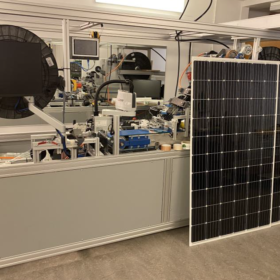
A cell interconnection method developed by a Swedish company promises lower-cost and higher-throughput production of PERC and more advanced silicon PV modules. The process is ready to move to pilot production, and its creators want to play a role in the anticipated European solar manufacturing renaissance.
Q Cells commits to three-year, €125m German R&D spend
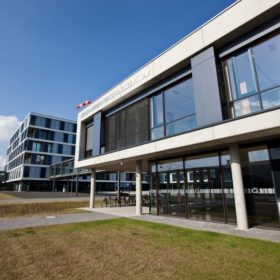
The Korean company has committed to invest in solar innovation in Germany at a time when the EU and member states are desperately trying to kick-start the Covid-19 recovery.
Chinese PV Industry Brief: Longi to grow by 10 GW, China opens world’s largest floating PV project
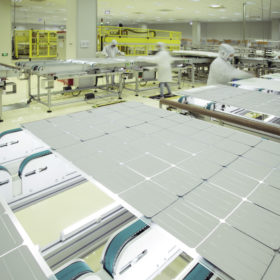
Plus, equipment manufacturer Shangji Automation is set to enter the silicon ingot making game with plans for an 8 GW fab, while state-owned developer Panda Green says it plans to add 500 MW of annual project capacity over the next three years.
Russian solar manufacturer goes green
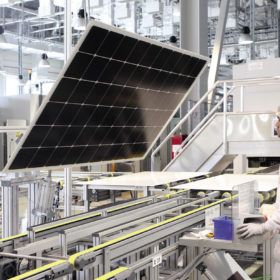
Hevel Group has announced it will source all the 65 GWh required annually to run its Novocheboksarsk factory from renewables sources via the wholesale market.
Chinese-made HJT hitting Australian rooftops
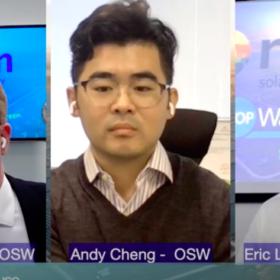
Risen Australia and distributor One Stop Warehouse signed an expanded 150 MW distribution deal last week, marking the Chinese manufacturer’s latest attempt to expand in the rooftop segment. With Risen’s new heterojunction module, the 415-435 W Sieger, now moving into mass production, One Stop Warehouse’s Leo Ye welcomed the “new, fresh” tech.
