
Ukraine’s law on FIT restructuring has passed: The expert view
Ukrainian renewable energy lawyer Svitlana Teush takes a look at the law which will define the cuts to be applied in Ukraine after extensive negotiation between government and the clean energy industry.

Brazil eliminates import duties for cells, modules, inverters and trackers
The Brazilian government has u-turned over solar equipment import duty by introducing a measure to remove the 12% levy for 101 types of module plus some inverters and trackers. President Jair Bolsonaro had vetoed a similar proposal by the Senate and House of Representatives in November, stating it would be too costly.
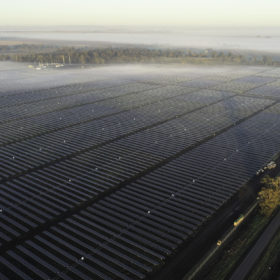
Chinese PV Industry Brief: Risen plans 13 GW output expansion, Datang reveals tender results
Risen Energy has announced plans to expand its annual cell and module output by 13 GW. Datang, meanwhile, has published the results of the module tender it held for this fiscal year.
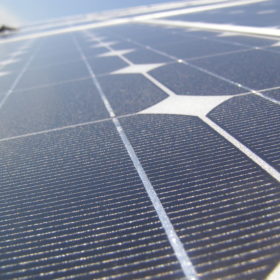
Vikram Solar plans 3 GW wafer, cell and module fab in Tamil Nadu
The engineering, procurement and construction services contractor – which has a 1.2 GW module production facility near Kolkata – will establish the factory under a five-year timescale.

Explosions at GCL polysilicon fab have reportedly taken down 10% of global production capacity
California-based investment banking group Roth Capital Partners has reported four flash explosions on Sunday and a fifth yesterday “working their way through the GCL facility across multiple systems in a chain-reaction-like sequence.”

PV module recycling should prioritize high-purity silicon recovery
Recovering silicon of the quality required for reuse in panels is at the heart of mitigating device carbon footprints. R&D efforts should be ramped up now, says an international research group, so the technology is in place when huge volumes of modules begin to need replacing.
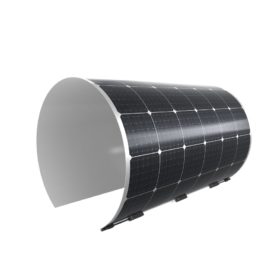
Flexible solar panel for BIPV from Sunport
The module is available in five versions with power output ranging from 310 W to 330 W and efficiencies between 20.22 and 21.53%. The Chinese manufacturer claims the BIPV panel has an oustanding flexibility with minimum curve radius of 25 cm.
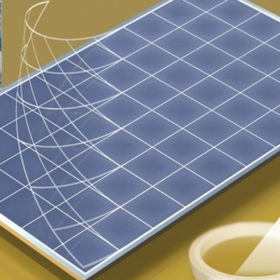
Solar film with integrated optics to increase performance of PV panels
Finnish company ICS has developed a foil which it claims can significantly increase the yield of solar panels, when applied to the edges of a PV module. Germany’s Fraunhofer ISE has confirmed that the increase in performance for conventional solar modules with the solar film is ranging from 5% to 10%.
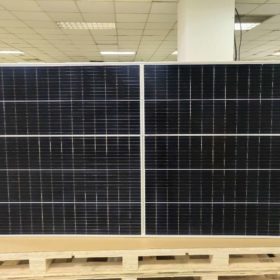
Trina reveals 600 W module
The Chinese giant has leapt ahead of rivals who recently announced their intent to work towards the next generation of mega panels by pledging to have its 600 W Vertex product on sale by the end of March.
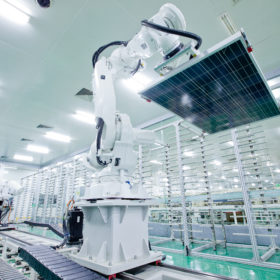
Jinko claims 24.79% efficiency for n-type monocrystalline cell
The Chinese manufacturer has claimed a world record for a large-size, contact-passivated solar cell. The result, certified by Germany’s Institute for Solar Energy Research in Hamelin, betters the company’s previous record by almost 0.6%.
