Trina the only solar winner in Colombian energy auction
The Colombian government has revealed more details of the renewable energy procurement exercise finalized on Monday. Chinese manufacturer Trina was the bidder behind all three successful solar projects in the auction.
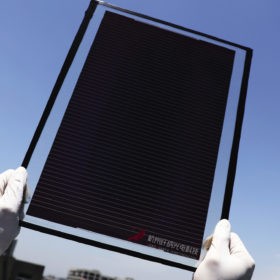
Microquanta achieves 14.24% efficiency with large-area perovskite solar module
The four-year-old Hangzhou-based business says it already has a 20 MW perovskite module pilot line and is working on a mass production facility in the city of Quzhou.
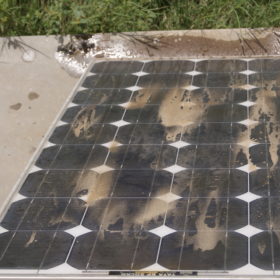
Promising soiling mitigation solutions should not be left to gather dust
A study has estimated the cost of PV project soiling may increase from €3-5 billion last year to €4-7 billion by 2023 due to more extensive deployment in high insolation and soiling-affected regions, such as China and India. The authors of the paper outlined the potential of soiling mitigation technologies while stressing more R&D is needed to reduce costs and for the adoption of such measures on a larger scale.
Enel leaps up solar developer global ranking after project spree
The Italian fossil fuel company is not hanging around when it comes to diversifying into PV, with almost 1.5 GW of generation capacity plugged in since the start of last year. Canadian Solar has disputed Wiki-Solar’s positioning of First Solar as the world’s biggest PV developer.
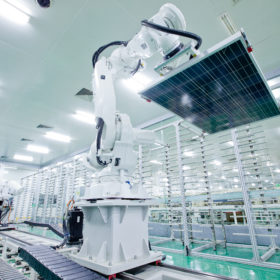
Jinko launches Tiger module Down Under
The Chinese manufacturer has officially unveiled its high-efficiency product in Melbourne after celebrating a 13.6 MW panel order from the nascent Hungarian PV market.
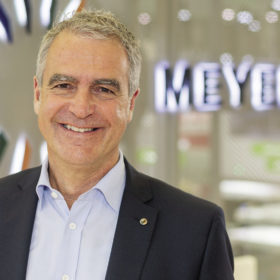
Meyer Burger literally betting the house on HJT cell strategy
The Swiss equipment maker has announced a fresh, CHF18 million order from Oxford PV but the news may have been strategically timed ahead of today’s update that it has completed the sale of its headquarters building.
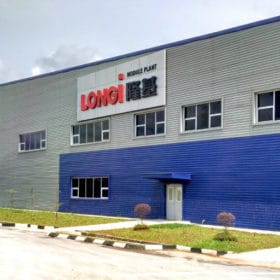
Longi Solar signs 200 MWp mono PERC supply deal in Vietnam
The Chinese solar manufacturing giant will supply its latest modules to Singapore-based PV developer Hexagon Peak for a utility scale pipeline in Vietnam.
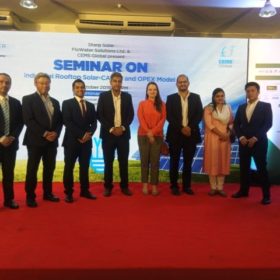
Bangladeshi industrial sector embraces leasing model for solar rooftops
The affordable public financing packages on offer for solar rooftops are attracting developers who have clients happy to lease out roofspace without any capital outlay in order to secure cheaper power.
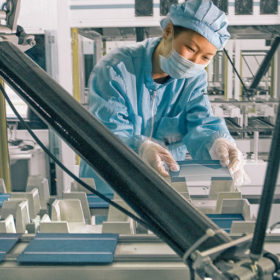
Yingli in talks with creditors over break up
The Chinese solar manufacturer today admitted it is in talks with its lenders and strategic investors about a break up of the company after its 2018 annual accounts revealed an apparently unserviceable debt pile. Any strategic investor is likely to constitute a Chinese state-backed bail-out.
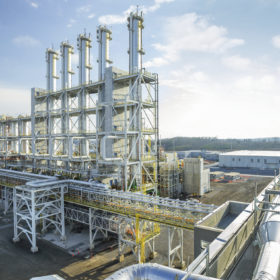
Wacker slashes profit forecast amid polysilicon price slump
German polysilicon producer Wacker Chemie AG has reduced its earnings expectations for 2019, citing low prices for polysilicon. The company blamed the polysilicon price slump on oversupply from competitors in China, which muted an expected price increase in the second half of 2019.
