I, Photovoltaics
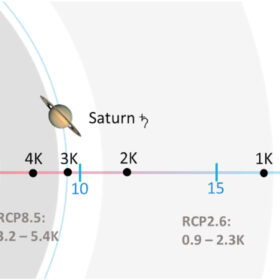
New research from Germany has investigated for the first time the idea of building a photovoltaic Dyson sphere, a theoretical megastructure that could provide vast amounts of energy for interstellar space travel and large-scale technological endeavors. Despite its highly theoretical and science-fiction inspiration, the study explains what consequences a similar construct would have on life on Earth.
Australia’s only silicon manufacturer bags $25 million in federal funding
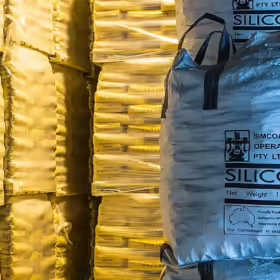
Western Australia silicon manufacturer Simcoa Operations has received an AUD 39.8 million ($25 million) investment from the Australian government to boost the country’s silicon manufacturing capabilities.
Alumina oxide nanoparticles extend perovskite solar cell lifetime
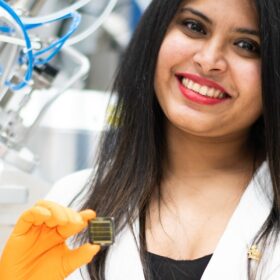
Scientists in the U.K. have used alumina oxide in perovskite solar cells to achieve lifetimes exceeding 1,300 h under standards-based heat and humidity testing. Their analysis showed that a reference cell based on conjugated polyelectrolytes degraded in one-tenth the time.
Home batteries vs. power generators
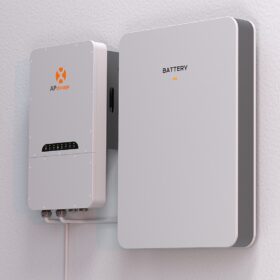
Assessing the difference in cost, functionality and operations of fueled generators versus home batteries.
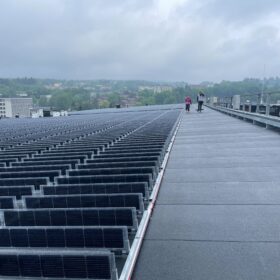
At high latitudes, vertical PV is more profitable in February than horizontal panels in June
A 248 kWp solar system deployed on the roof of Oslo’s Ullevaal Stadium was found to be more profitable in February than a comparative horizontal array in June. The vertical panels’ ability to generate more energy in winter months than horizontal equivalents helped save more money against Norway’s typically high electricity prices in winter.
Viridian Solar launches 23.6%-efficient TOPCon BIPV panel
The UK company says the new modules have a rated power output of 445 W and can reportedly guarantee a power yield of 95% after 10 years.

How much time do homeowners spend acquiring a rooftop PV system
Scientists have conducted a survey and analyzed transaction costs of residential PV projects. They focused on the time spent searching for and assessing information, as well as the time spent on aspects related to financing, permits, and contracts. Scoping information was the most time-consuming task.
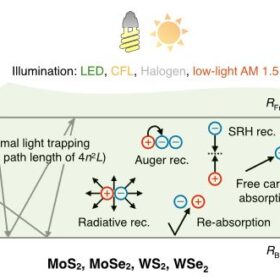
Indoor transition metal dichalcogenide solar cells may reach 36.5% efficiency
New research from Stanford University has investigated the performance limits of transition metal dichalcogenide solar cells for indoor energy harvesting intended for powering internet of things (IoT) devices and sensors. The analysis showed these cells may reach a power conversion efficiency of up to 36.5%.
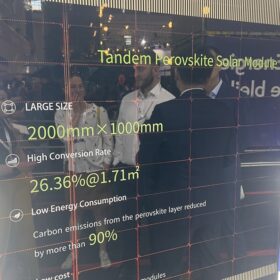
Chinese PV Industry Brief: Kelin Electric to raise funds for 1 GW perovskite project
Kelin Electric says it plans to raise up to CNY 1.46 billion ($201.8 million) through a private placement, with CNY 1.26 billion allocated for a 1 GW perovskite solar module project in Hangzhou, Zhejiang province.

Key takeaways from Solar Solutions Amsterdam 2025
The Solar Solutions Amsterdam 2025 trade show highlighted the shift in Europe toward smarter, scalable energy systems, showcasing innovations in residential and commercial solar technology as demand for integrated, flexible solutions continues to grow.
