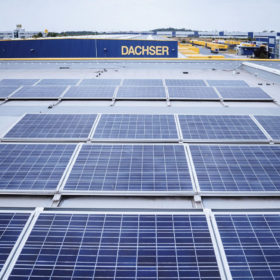
Weekend Read: From diesel to DC
For a long while, it looked as if hydrogen fuel cells would be the technology of choice for emissions-free road transport. However, truck manufacturers and freight forwarders recently turned their attention to battery-electric vehicles. This will require special charging technology and PV looks set to play an important role.
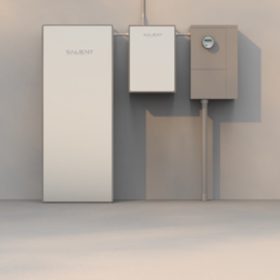
It could be simple to smarten up your inverter
With AI-enabled devices able to take the money-saving efficiency of lithium batteries to an incredibly granular level, research by Inion Software shows simple changes by inverter manufacturers would enable devices of almost any age to be “smartened up.”
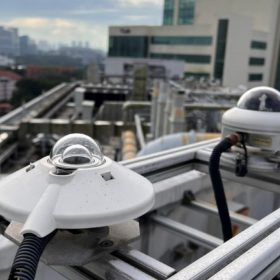
Singapore to adopt solar forecasting model
Scientists have completed a one-year trial of a model that calculates solar irradiation forecasts up to 24 hours in advance. Singapore’s Energy Market Authority now plans to adopt solar irradiance forecasting, as the model has an average error rate below 10% for one-hour forecasts.
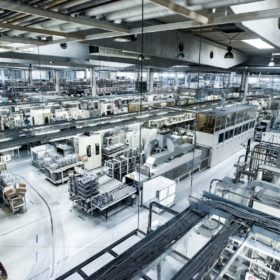
Daikin to scale up heat pump output in Czechia
The Japan-based manufacturing company has revealed plans to increase fivefold its production of heat pumps at its facility in Czechia by 2025.
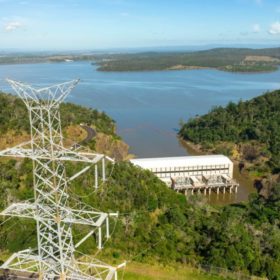
Australian state announces world’s ‘biggest pumped hydro scheme’
Annastacia Palaszczuk, the premier of the Australian state of Queensland, has launched a new plan to develop what could be the world’s biggest pumped hydro scheme.
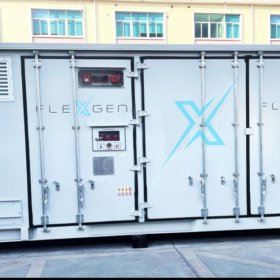
FlexGen launches modular C&I battery
FlexGen, a US-based storage system integrator, has launched a new modular battery solution for the commercial and industrial market. The FlexPod energy storage system combines lithium iron phosphate batteries, a power conversion system, and HVAC in a single container solution, with a range of configurations.

Management system combines rooftop PV, heat pumps
Swiss startup Solar Manager AG has designed a new energy management system that is compatible with the inverters of Solaredge, Solax, Kostal, Fiemer, Fronius, and other manufacturers.
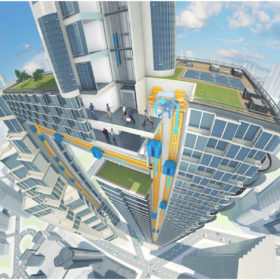
Storing renewables with high-rise elevators
Lift Energy Storage Technology is a proposed long-term storage solution that relies on elevators to bring solid masses to the tops of buildings in charging mode. It then lowers the same mass to produce electricity in discharge mode.
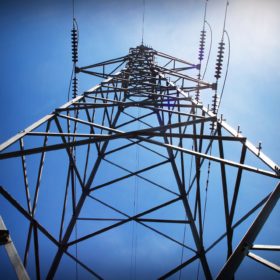
Grid company appeals for flexibility from energy consumers
Tennet has suffered well-cataloged problems attempting to absorb solar projects into parts of its Dutch grid network and is now appealing for help in two pinch provinces.
Fluid gas market situation casts shadow over EU energy system models
With each of the 10-year network development plans produced by Europe’s electricity transmission system operators years in the making, the latest such publication may already be out of date as the bloc prepares to fast forward its energy security and climate change ambitions.
