
Iron-based redox flow battery for grid-scale storage
Researchers in the U.S. have repurposed a commonplace chemical used in water treatment facilities to develop an all-liquid, iron-based redox flow battery for large-scale energy storage. Their lab-scale battery exhibited strong cycling stability over one thousand consecutive charging cycles, while maintaining 98.7% of its original capacity.
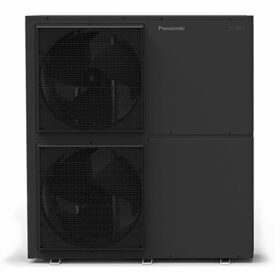
Panasonic reveals new air-to-water heat pumps
The new products are intended for commercial applications and and multi-dwelling buidlings. They have a size of 20 kW to 30 kW and use R290 as the refrigerant.
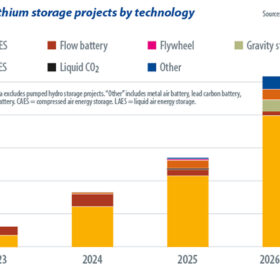
Can anything topple lithium-ion?
The need for long-duration energy storage in a net-zero world is undeniable but with conventional battery prices tumbling, can anything dislodge the mainstream grip of lithium ion? S&P Global’s Susan Taylor provides an update on non-lithium storage technologies.
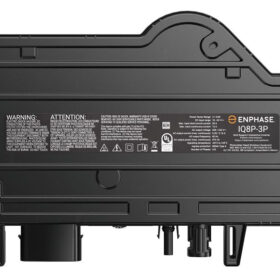
Weekend Read: Gray skies over Californian solar
There may be a global solar boom but a drastic revision of California’s net metering program has ruptured the industry overnight and is affecting everyone from installers to financiers to makers of power electronics.
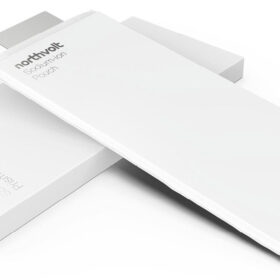
Sodium-ion batteries – a viable alternative to lithium?
While lithium ion battery prices are falling again, interest in sodium ion (Na-ion) energy storage has not waned. With a global ramp-up of cell manufacturing capacity under way, it remains unclear whether this promising technology can tip the scales on supply and demand. Marija Maisch reports.
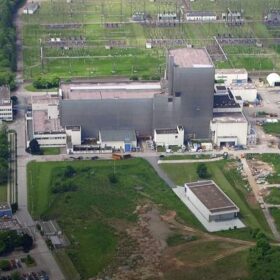
German utility to build 280 MWh battery at former nuclear plant
German municipal utility Westfalen Weser is looking to develop a 120 MW/280 MWh battery storage facility at the site of a former nuclear power plant in the German state of North Rhine-Westphalia.

The Hydrogen Stream: Germany mulls Namibian hydrogen investment
The German government has confirmed the suitability of Hyphen’s hydrogen project in Namibia for potential investment, while Topsoe has completed a 2,000-hour demonstration of 12 solid oxide electrolyzer cell (SOEC) stacks.

UK firm finalizes $18 million deal for renewables in Nigeria
UK-based Konexa has finalized a deal that will see Climate Fund Managers and Microsoft’s Climate Innovation Fund invest $18 million to establish Nigeria’s inaugural private renewable trading platform and provide renewable energy to Nigeria Breweries.
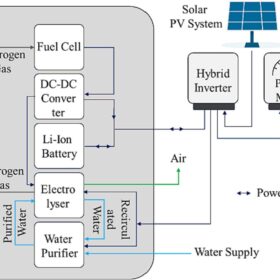
Hydrogen batteries vs. lithium-ion batteries
Researchers in Australia have compared the technical and financial performances of a hydrogen battery storage system and a lithium-ion battery when coupled with rooftop PV. They evaluated two commercially available systems – LAVO and Tesla Powerwall 2 – and found that the lithium-ion battery provides better financial profits, whereas the hydrogen battery offers more battery lifespan for long duration of energy storage.
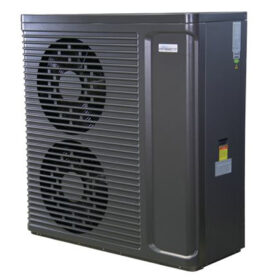
U.S. Boiler unveils hydronic heat pump for residential applications
The US-based manufacturer said its new heat pump system has 5-ton capacity and a coefficient of performance of up to 3.95. It uses difluoromethane (R32) as the refrigerant and relies on DC inverter enhanced vapor injection (EVI) technology.
