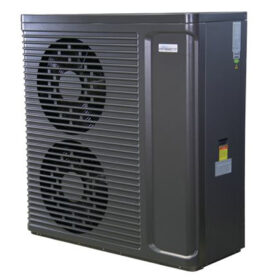
U.S. Boiler unveils hydronic heat pump for residential applications
The US-based manufacturer said its new heat pump system has 5-ton capacity and a coefficient of performance of up to 3.95. It uses difluoromethane (R32) as the refrigerant and relies on DC inverter enhanced vapor injection (EVI) technology.
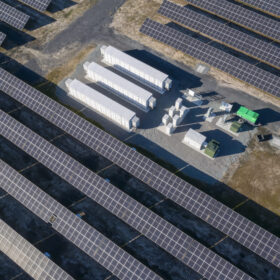
US energy storage sector booming, says Wood Mackenzie
Lower costs, better supply chains and steady demand are driving an energy storage boom in the United States, according to a new report from Wood Mackenzie.
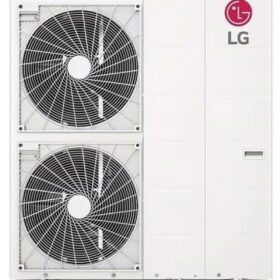
LG presents residential air-to-water heat pump
The system uses difluoromethane (R32) as the refrigerant and has reportedly a seasonal coefficient of performance of up to 4.69.
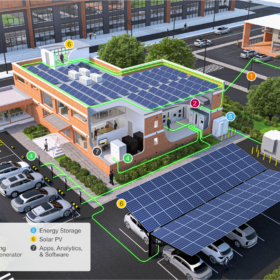
Schneider Electric, Mainspring offer multi-fuel microgrid solution
Schneider Electric’s EcoStruxure Microgrid Solution can be paired with Mainspring Energy’s Linear Generator to produce and store carbon-free energy for continuous use.
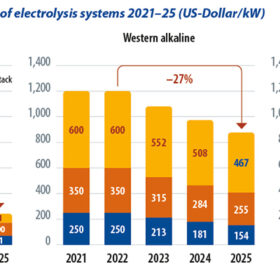
Electrolyzer prices – what to expect
In addition to the cost of electricity, the price of hydrogen depends largely on the up-front investment cost of the electrolyzer. The lower the full-load hours, the greater the impact. Analyst BloombergNEF (BNEF) sees a number of different possible pathways for the market to develop.
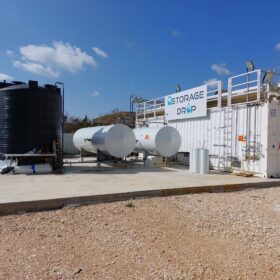
Israeli startup develops PV-driven cooling system based on compressed air
Storage Drop has secured a grant from the European Union to develop its PV-driven cooling system technology for low temperature environments. The system is based on compressed air energy storage technology and a hydraulic isothermal compressor with a water pump that compresses the air in an isothermal process.
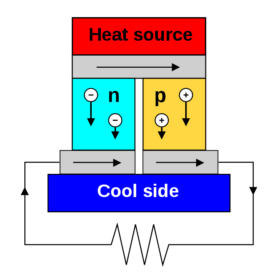
Hybridizing thermoelectric generators with photovoltaic ground-source heat pumps
Researchers in South Korea have analyzed the feasibility of using thermoelectric generators in combination with residential solar-assisted ground-source heat pumps and have found that the thermoelectric devices may act as a suitable power source for data loggers and other sensors in a building system.
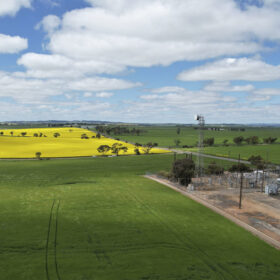
Zen Energy starts building 111 MW/270 MWh battery in Australia
Australian renewable gen-tailer Zen Energy is set to build the second-largest battery energy storage system in the state of South Australia, in a move that is expected to improve the reliability of electricity supply.

Tesla’s new power play
The first installations featuring the Tesla Powerwall 3 are currently being completed in the United States, with the company promoting a fully integrated solar-plus-storage and electric vehicle (EV) residential system, with big backup power capacity. While the first Powerwall created a new market segment, the latest iteration enters a marketplace in oversupply.

The Hydrogen Stream: Germany’s hydrogen strategy takes shape
Germany made progress with its hydrogen strategy, while Australia announced plans for a hydrogen feasibility study.
