
Austrian supplier unveils heat pump adaptive to PV, weather, power prices
Austria’s Ökofen has developed a residential heat pump that identifies cost-effective and eco-friendly electricity in real time, in order to optimize heat production. It is now seeking a patent for its proprietary control technology.

Australian shipbuilder to deliver world’s largest all-electric ferry
Australian’s Incat Tasmania is building the world’s largest all-electric ship at its shipyards in Hobart. The 130-metre-long vessel is to be fitted with a 40 MWh battery energy storage system that will power a series of electric propulsion system and waterjets.
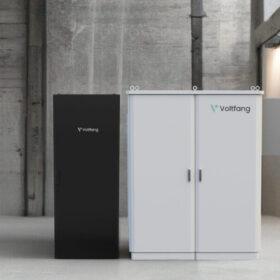
Voltfang unveils outdoor storage system with recycled EV batteries
Germany’s Voltfang has developed outdoor stationary storage systems featuring recycled electric-vehicle batteries with capacities ranging from 33 kWh to 644 kWh.
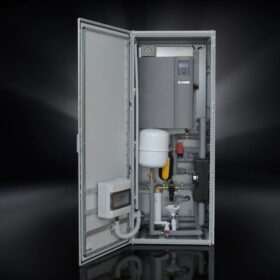
3U launches heat pump for residential applications
Germany’s 3U Holding AG said its ThermCube heat pump is an ideal solution for new and existing detached and semi-detached houses with a total heat demand of between 6 kW and 11 kW. The new product has reportedly a heat output of 2.33 kW to 8.20 kW and a flow temperature of up to 70 C.

Decentralized heat pumps with district heating could cut opex by 24%
Researchers in Finland say that decentralized heat pumps could provide significant cost savings when selling surplus heat into district networks. However, they warned that capital expenditure remains high.
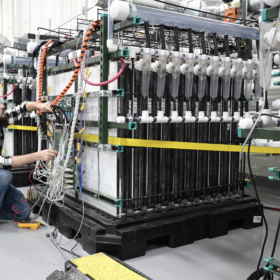
Multi-day energy storage increases grid capacity by factor of 10
Form Energy has released a white paper that provides further evidence that multi-day energy storage, like its iron-air technology, can substantially reduce the costs for New York to achieve its ambitious decarbonization targets.
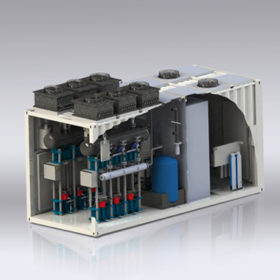
Novel algorithm to prevent overinvestment in power-to-gas in areas with high PV penetration rates
Scientists in South Korea have created an algorithm that reportedly prevents oversizing of power-to-gas systems located in areas with large shares of solar and renewable energy capacities. The algorithm calculates saturation points for both PV and power-to-gas facilities.
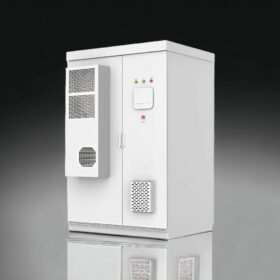
Chelion unveils scalable battery storage solution
Chelion Australia, an energy storage solutions specialist, has developed a new all-in-one lithium iron phosphate battery cabinet for commercial applications.

Retrofitting old residential buildings with hybrid heat pumps
New research shows that hybrid heat pumps combining an electric heat pump and a gas boiler represent a technically feasible and economically viable solution to partially decarbonize heat supply in older dwellings. Gas and electricity prices, however, are crucial factors in real scenarios.
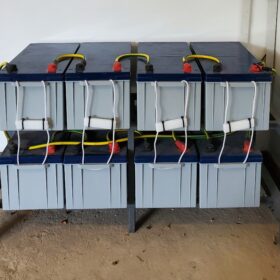
German consumer group debunks residential battery misconceptions
Verbraucherzentrale NRW, a German consumer protection association, has issued a warning about five misleading assumptions about PV-linked residential battery systems.
