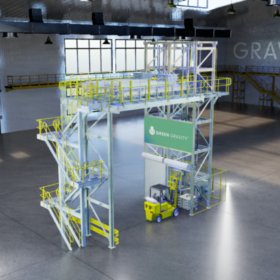
Australian startup to develop gravity storage tech for mine shafts
Australian gravity storage startup Green Gravity has revealed that it will build a new R&D facility in the Australian state of New South Wales.

Storing renewables with compressed CO2, combined heating and power unit
A Chinese research group has combined compressed CO2 with combined heating and power (CHP) units for renewable energy storage. The system has achieved a total energy efficiency of 35.96% and an energy storage density of 1.54 kWh/m3.
India’s green hydrogen demand to reach 2.85 MMT/year by 2030, says USAID
USAID’s South Asia Regional Energy Partnership (SAREP) says in a new report that Indian green hydrogen demand will reach 2.85 million metric tons (MMT) per year by 2030.
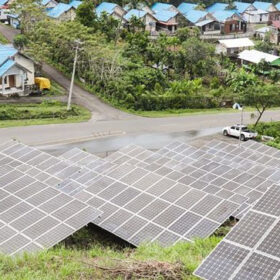
Indonesia’s race to net zero
Coal-dependent Indonesia has huge solar potential but progress toward a net zero economy has been sluggish, explain Daniel Kurniawan and Fabby Tumiwa from the Institute for Essential Services Reform (IESR), an Indonesian thinktank.

Gran Canaria moves forward with 200 MW pumped hydro project
The authorities on the Spanish island of Gran Canaria have decided to resume work on a 200 MW pumped hydro project after they determined that cavities and canals in a water reservoir are not archeologically significant.
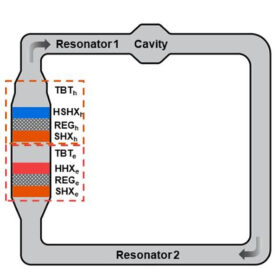
Novel thermoacoustic heat pump system for residential applications
Developed by Chinese researchers, the system is designed to reach a heating capacity of 5.7 kW and an overall coefficient of performance of 1.40 at nominal conditions. It is made with an engine unit, a heat pump unit, and a gas resonator unit in a loop.
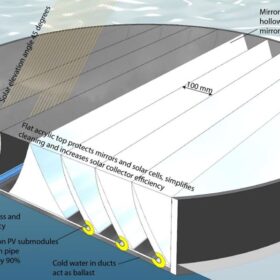
Floating concentrating photovoltaic thermal system for carbon capture
Two Norwegian companies are designing floating concentrating photovoltaic thermal technology that can produce both electricity and heat. It is intended for use in carbon capture projects and to be supported by an industrial heat pump system.

Chile has 231 MW of storage under construction, PV capacity tops 8.2 GW
As of the end of March, Chile had 4,748 MW of PV projects under construction, 19,832 MW of solar projects approved, and another 4,660 MW under review.
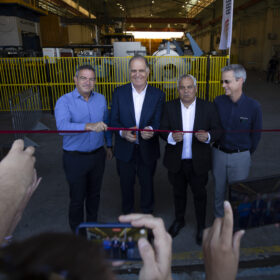
Brenmiller switches on 4 GWh rock-based thermal energy storage system factory in Israel
Brenmiller secured a €7.5 million ($8.2 million) credit facility from the European Investment Bank (EIB) to build the factory.
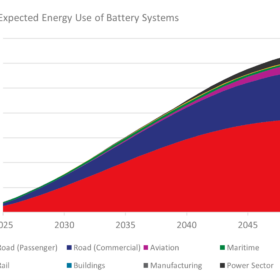
Role of hydrogen, batteries in UK’s decarbonization efforts
Hydrogen and battery technologies are expected to play an increasingly vital role in the UK’s transition to net zero by 2050, but the varying time scales of their rollouts are driving uncertainty in predicted market share profiles over time, according to a new report.
