
New cathode design promises battery sustainability
Scientists in the U.S. developed a new cathode design for lithium-ion batteries that they say could open up a range of different materials for further research. The group has high hopes that the discovery can quickly be brought to scale, easing some of the growing concerns around supply chains for battery materials.
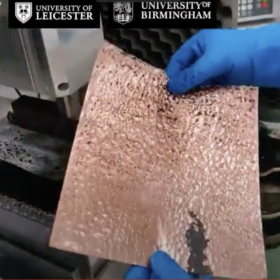
From toothbrushes to saving the planet: How ultrasonic delamination could hold the key to battery recycling
The use of ultrasonic sound waves has been applied to battery recovery. Researchers from the ReLiB project at the U.K.’s Faraday Institution say the process has already proven to be 100 times faster than conventional approaches. It is also much more sustainable and less energy intensive.

India to host new 1 GWh lithium-ion battery factory
LNJ Bhilwara has set up a joint venture with India’s Replus Engitech to create lithium battery solutions for e-mobility and stationary applications. The venture aims to have 1 GWh of capacity operational in the city of Pune by mid-2022, with plans to eventually scale it to 5 GWh by 2024.

‘Low-cost renewable hydrogen may already be in reach’
If the three record-busting low solar price tariffs recorded in the Middle East in the past 18 months are to be believed, renewables-powered hydrogen in prime sites in the region could already compete with gas-plus-CCS production, according to IRENA. Has the Gulf discovered the new petrol?

New microinverter from the US
Yotta Energy’s new micro-inverter is claimed to be an ideal solution for commercial rooftop PV systems linked to between 500 kWh and 1 MWh of storage. The device has a peak efficiency of 96.5% and a nominal maximum power point tracking (MPPT) efficiency of 99.5%.
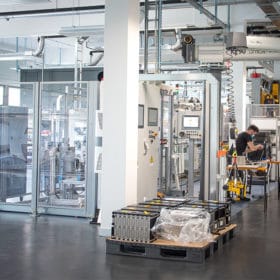
Lithium-ion battery modules for energy intensive e-transport applications
Swiss manufacturer Leclanché will build the new battery modules at its manufacturing facility in Yverdon-Les-Bains. These products can be used for transport applications such as marine, commercial vehicle, and railway.

Industrial green hydrogen could become a global commodity but local production is needed for transport uses
Long distance, point-to-point transport of green hydrogen for industrial use can harness the cheap solar electricity available in some parts of the world but distributing the energy-storage gas to individual refueling stations, for vehicle fuel cell use, will likely have to depend on production nearby.

Investigating all-manganese flow batteries
Scientists in Germany fabricated an all-manganese flow battery, which they say serves as a proof of concept for the potential of such devices. Their results working with various battery configurations show that cheap, abundant manganese has plenty of potential for flow battery applications; and is worthy of further investigation in the frame of developing sustainable energy storage technologies.
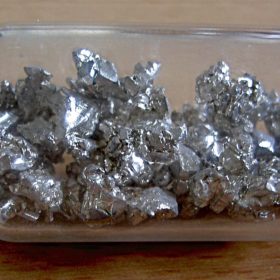
Cathode discovery ‘opens up new pathways’ for calcium-ion storage
Scientists in South Korea tested a new cathode material as part of a calcium-ion battery (CIB), achieving some impressive results. The material retained more than 90% of it initial capacity after 500 cycles, alongside some of the best performance results seen so far for this technology. The scientists say that this discovery opens up “an unexplored pathway toward the realization of stable and high-power cathodes in CIBs.”

Photovoltaics, heat pumps to rescue failed geothermal project in Poland
The Polish government is supporting a hybrid renewable energy project based on a deep-borehole heat exchanger (DBHE) whose heat pumps are powered by photovoltaics. The heat generated by the facility will be used for district heating.
