
UK government asks how future renewables incentives should work
The success of unsubsidized clean power facilities in the country – whether driven by corporate power purchase agreements or selling direct to the wholesale electricity market – has prompted the Department for Business, Energy and Industrial Strategy to ponder whether contracts-for-difference payments will be fit for purpose in the years ahead.
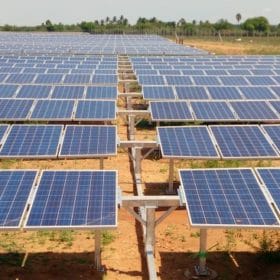
Financing large scale renewables in emerging economies
pv magazine has taken part in a webinar examining the thorny issue of financing clean energy generation in developing markets.

Spain’s Endesa unveils ambitious plans for green hydrogen
The Spanish power utility announced it wants to deploy 23 green hydrogen projects by 2024. The company plans to build around 340 MW of electrolyzer capacity.
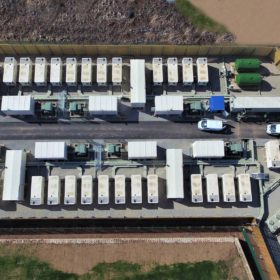
European Commission bids to ease planning of trans-border battery and hydrogen projects
The commission has proposed updating the law which regulates the bloc’s cross-border energy networks to include new energy storage technologies and smart grids as well as removing fossil fuel eligibility for public funding.

European Commission approves further €2.9bn battery research project
Companies from a dozen EU member states will commit the public funds in a bid to come up with novel battery chemistries and production methods as well as recycling and circular economy innovation.
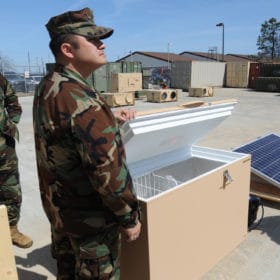
The Indian market for off-grid solar refrigeration
Standalone solar-powered refrigerators present a $20 billion opportunity in India for vaccine storage, milk chillers, households, micro enterprises, and cold storage for farm produce, according to a new report by Gogla.

pv magazine Award: The Winners
In many respects, the past year has been unlike any other. But the innovation and ambition driving the expansion of the solar and energy storage industries is one constant that has remained, Across seven categories, pv magazine’s award winners for 2020 demonstrate high levels of technical expertise, creativity, mass production capabilities, and real market impact from PV and power electronics companies big and small. Following on from the virtual award ceremony held this morning, the winners are….
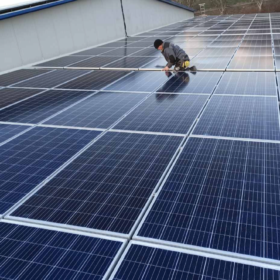
IFC says green recovery could drive $2.5tn renewables market this decade
The private-sector arm of the World Bank, which claims to leverage $3 of its own capital and $8 from third parties for every dollar invested in its blended finance funds, has attempted to quantify what devoting Covid recovery funds to green investment would mean for emerging economies.
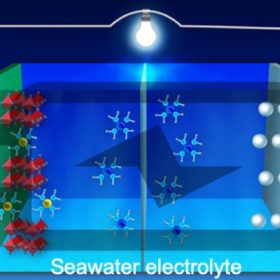
Seawater aqueous battery based on alloy of zinc and manganese
Scientists in the United States developed a new anode for aqueous batteries. A working battery utilizing this anode, with seawater as an electrolyte, demonstrated impressive energy density, and remained stable after 1,000 hours of high current cycling. The group is already discussing the potential of their approach in large-scale manufacturing.
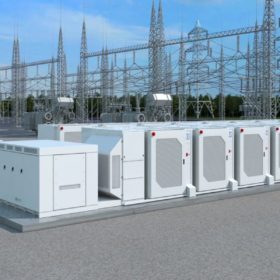
Irish ESB to add 100 MWh of Fluence storage to its portfolio
State-owned utility ESB is working with energy storage solution company Fluence and EPC service providers Powercomm Group and Kirby Group on its first battery projects in Ireland.
