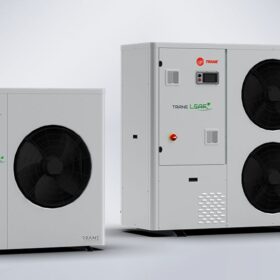
Trane debuts air-to-water heat pumps
The new products use propane (R290) as a refrigerant and have heating and cooling capacities ranging from 8 kW to 30 kW.

Kosovo to auction 950 MW of renewables, 170 MW of battery storage
Kosovo plans to auction off 950 MW of renewables over the next two years, to the tune of €1.2 billion ($1.29 billion).
Coupling ground-source heat pumps with heat storage, borehole heat exchangers
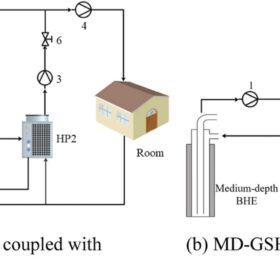
Scientists from China have developed a novel optimization method for medium-depth ground source heat pumps, using an improved chaos particle swarm optimization. They coupled it with either a heat storage tank or a shallow borehole heat exchanger and found that both system typologies increase the heat pump’s coefficient of performance.
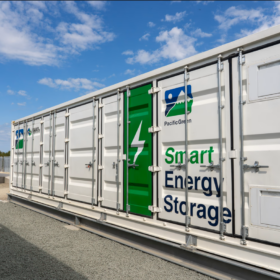
Pacific Green targets 12 GWh battery storage rollout
UK renewables developer Pacific Green Technologies says it will double down on battery energy storage systems as a priority in 2024, as it has expanded its global pipeline to 6 GWh over the past year.
The Hydrogen Stream: Zaha Hadid designs marina refueling stations
Zaha Hadid Architects has unveiled the world’s first green hydrogen refueling network for recreational boats at marinas in Italy, while a German-Czech consortium has announced the development of a drivable hydrogen motorcycle.
Hybridizing PVT energy with heat pumps, borehole storage
A European research group has tested an energy system combining PVT collectors, a water-to-water heat pump and borehole thermal energy storage in an Italian swine farm and has found the proposed system can completely replace fossil fuel-based power generation.
Long-duration storage market to hit $223 billion in 20 years, says IDTechEx
Alternatives to lithium-ion batteries will likely emerge in the years to come, according to a new report by IDTechEx.
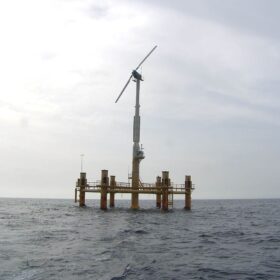
Subsea pumped hydro for utility scale storage at deepwater
Researchers in Norway have investigated the technical potential of implementing subsea pumped hydro storage at water depth not exceeding 2,000 m. They also identified potential locations for these storage systems based on energy density.
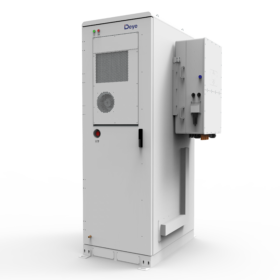
Deye releases new 50 kW/61.4 kWh battery
Chinese inverter manufacturer Deye has developed a new all-in-one energy storage system (ESS) with 50 kW of output and 61.4 kWh of storage capacity. It features LiFePO4 batteries with a maximum temperature of less than 40 C.
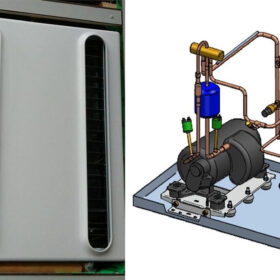
Façade-integrated R290 split-type heat pump for domestic hot water
Researchers in Austria have developed a new heat pump system for residential applications that reportedly achieves a coefficient of performance ranging from 2.82 to and 3.11 at an outdoor air temperature of 10 C and 20 C, respectively. They also found the system was able to supply the comfort conditions at all tested outdoor temperatures.
