India’s 1 GW-plus ‘ultra-mega’ solar parks driving the energy transition
The nation hosts numerous gigawatt scale sites, two of which are the largest commissioned in the world. The huge PV parks have been instrumental in driving economies of scale and continue to attract global capital and some of the most recognized renewables developers.

European solar records will continue to tumble this summer
Solar forecasting company Solargis says the insight offered by Covid-19 industrial shutdowns into a renewables-driven future serves to emphasize the value of the chief commodity it trades in – data.

A gigawatt solar factory in Europe? Why it must be in France
With Swiss solar equipment company Meyer Burger laying plans for a module fab in North Rhine-Westphalia and Norwegian panel maker REC Group mulling a fab in Sarreguemines, northeastern France, Xavier Daval – from French renewables association the SER – says it is time Europe resumes its path to a stable solar manufacturing industry, not least because of the rising proportion of solar module costs accounted for by shipping.
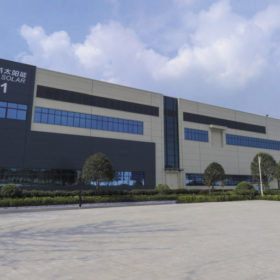
Chinese PV Industry Brief: Lower wafer prices, new modules, and a factory under construction
Longi has announced more cuts to wafer prices, while cell manufacturer Tongwei has started building the first phase of its 30 GW Jintang PV manufacturing base. Risen Energy has also released solid financials, while JA Solar has unveiled plans to start selling its 500 W-plus solar modules.
Poland added 236 MW of solar in two months
The country’s installed PV capacity reached 1.83 GW at the end of last month, according to the national grid operator.
Covid-19 hampering the survival prospects of private solar developers in China
SFCE has revealed, in a string of stock market updates this year, the coronavirus pandemic is complicating its efforts to sell off PV projects fast enough to pay off creditors.

500 W-plus panel race intensifies with JA Solar’s new module, Risen’s first shipments
Chinese manufacturer JA Solar has announced a new 525 W+ panel and said the product will be available from the second half. Domestic rival Risen has shipped the first batch of its high-powered modules and intends to stick to pre-Covid-19 plans to ramp up production.
Indian renewables-plus-storage tender secures power for $0.038/kWh
Winning developer Renew Power can opt for solar, wind or hybrid plants along with energy storage systems to ensure round-the-clock power supply.

How to protect clean energy auctions during Covid-19 crisis
The EU research group tasked with optimizing renewable energy auction procurement processes said the achievement of climate change goals brought about by plunging energy demand should not endanger longer-term ambitions.
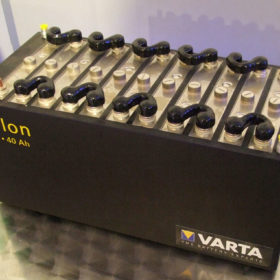
Lithium-ion storage is here to stay
A German-Israeli research group has gathered for three days to discuss which storage technologies may outperform lithium-ion batteries in the future. They concluded that there is no such a thing as a “post Li‐ion” era in sight. They recommended a “side‐by‐side” approach for multiple technologies in different applications, as well as the hybridization of technologies. The group highlighted the strong potential of redox flow storage, which in their view may outperform Li‐ion, although only for stationary applications.
