
Mali exempts solar from VAT, import duties
The move represents a step forward in the implementation of the National Action Plan for Renewable Energy (Paner), through which the West African nation aims to install 1.42 GW of renewable energy by 2030.
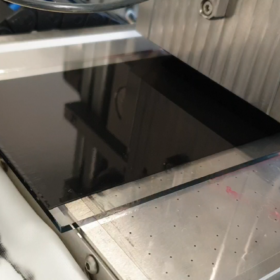
Swiss researchers unveil new perovskite process
A group of scientists at Switzerland’s Federal Laboratories for Materials Science and Technology (EMPA) has demonstrated a new manufacturing process, based on slot die coating, for the production of perovskite thin-film solar cells. The laboratory has fabricated small perovskite modules using this process and has plans to move into the field-testing phase later this year.

Covid-19 daily bulletin: Indian installations to be delayed by outbreak
pv magazine rounds up the latest Covid-19-related stories likely to affect the world of solar and energy storage.

EU opens public consultations on climate targets
The European Commission has launched a 12-week online public consultation period for its 2030 climate targets.
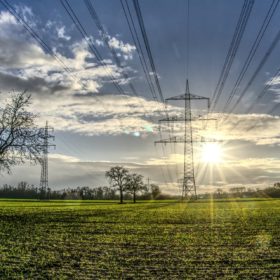
World now has 583.5 GW of operational PV
Global grid-connected solar capacity reached 580.1 GW at the end of 2019, along with 3.4 GW of offgrid PV, according to the International Renewable Energy Agency. Total installed renewables capacity hit a remarkable 2,563.8 GW, with hydropower remaining the dominant source at 1,310.9 GW, followed by wind at 622.7 GW.

New Zealand may reach 6 GW of solar by 2050
National utility Transpower said that solar could take a 9.3% share of the country’s generation mix by the middle of the century. However, real growth is only forecast to occur from 2035, with distributed generation expected to account for more than 80% of total installed PV.
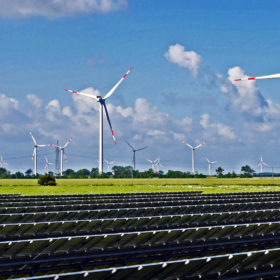
Indian government asks utilities to maintain payments to power producers
The clarification came after states across the country reacted to the power ministry’s recent call for a moratorium on conventional power payments by stopping payments and curtailing renewable power.

The weekend read: Turkish policy turns to the rooftop
Turkey’s stuttering economy, shifting PV policy landscape, and the fruitless YEKA tenders have undermined the country’s solar progress, even though it was considered Europe’s most promising market as recently as two years ago. But its rooftops could still bloom if new regulations that will be issued in May manage to make solar attractive to both businesses and households alike.
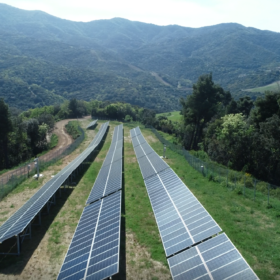
Greece wraps up PV tender with record-breaking €0.04911/kWh tariff
Greece held its last round of renewable energy tenders in Athens on Thursday, resulting in the lowest tariff ever awarded to a renewable energy project in the country.

Australian rooftop solar surged to record highs before lockdown
Research by Green Energy Markets shows that the Australian rooftop PV market remained healthy throughout the first three months of 2020. According to STC data, more than 30,000 rooftop installations were registered in the month, for a total of close to 250 MW of capacity. And then came Covid-19.
