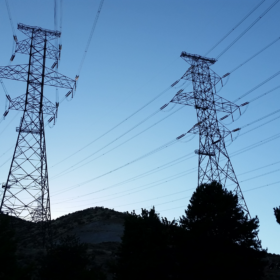
Belgian grid operator warns of PV overproduction, curtailment in spring
Belgian grid operator Elia says that rapid solar fleet growth is driving earlier seasonal overproduction peaks, raising curtailment risks this spring. It plans to expand flexibility measures to stabilize the high-voltage network.
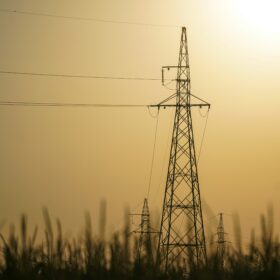
UK grid connections reform approved to ‘axe zombie projects’, fast-track 65 GW solar deployment
UK energy regulator Ofgem has approved connection queue reforms for Great Britain’s electricity grid. The change could see 65 GW of solar projects enter the fast-track “Gate 2” connections queue. The government claims reform will accelerate renewables and energy storage deployment while unlocking GBP 40 billion ($53 billion) of investment in clean energy and infrastructure.
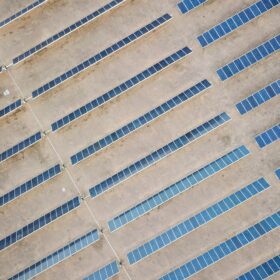
Chinese PV Industry Brief: PowerChina cancels 51 GW module tender for 2025
PowerChina has scrapped its 51 GW solar module tender for 2025 due to the impact of policy shifts on procurement needs. The tender, which began in November 2024, attracted 58 bids, with average quotes of CNY 0.68 ($0.093)/W for tunnel oxide passivated contact (TOPCon) modules and CNY 0.773/W for heterojunction (HJT) modules.
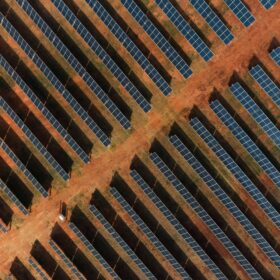
Global solar module shipments hit 703 GW in 2024
The new edition of the International Technology Roadmap for Photovoltaic (ITRPV), published this week, reports that average PV module prices last year dropped by 33% compared to the end of 2023.
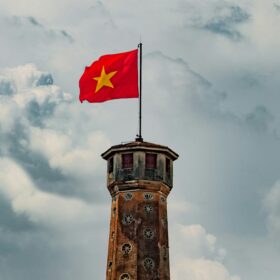
Vietnam publishes feed-in tariffs for large-scale solar-plus-storage
The Vietnamese authorities released the feed-in tariff levels for ground-mounted and floating PV plants, with or without storage.

Key takeaways from SolarEx Istanbul
The 17th edition of SolarEx Istanbul, which took place from April 10 to April 12, was the largest to date. As Turkey’s solar deployment increases, there was discussion on how to manage future installations, develop untapped domestic markets, and secure future investments.

Japan’s NEDO opens fiscal 2025 funding round for solar tech innovation
Japan’s national energy R&D agency has launched a five-year R&D program to accelerate solar innovation. The fiscal 2025 call for proposals seeks advances in high-efficiency cells, site-specific systems, PV module recycling, and long-term power stability.

Who are the solar and wind champions?
In a new monthly column for pv magazine, the International Solar Energy Society (ISES) reveals that Sweden, Australia, Netherlands, Germany and Denmark are the leading countries for per capita solar and wind generation capacity. Furthermore, it explains that global solar capacity has been doubling every 3 years, and wind every 6 years, whereas fossil and nuclear capacity and generation have been almost static in recent years.
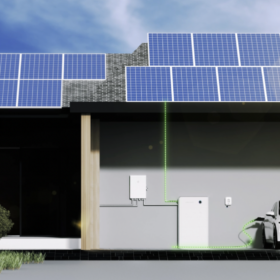
Australian entities say V2G tech ready for market
Essential Energy, the Commonwealth Scientific and Industrial Research Organisation (CSIRO), renewable tech company Sigenergy and electric vehicle distributor AUSEV have jointly announced vehicle-to-grid (V2G) technology is market ready in Australia.
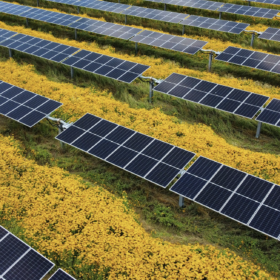
Acoustics for solar harmony
Fixing a project’s acoustics can be costly and difficult, but easily avoided if considered early in the project’s development.
