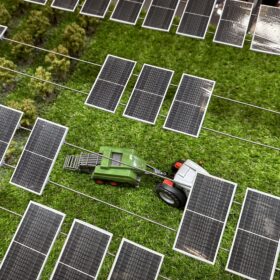
Italy extends construction deadline for agrivoltaic tender
Italy has extended the construction deadline for 1.5 GW of awarded agrivoltaic projects to June 30, 2026, after developers failed to meet the original timeline.

Manitoba launches retrofit program to cut home heating costs
The Canadian province of Manitoba has launched the Affordable Home Energy Program to support ground-source heat pump adoption in electrically heated homes. The initiative, run by Efficiency Manitoba, offers no-upfront-cost options and could cut household electricity bills by up to CAD 1,000 ($730) per year.

Jinko Solar expects transition phase for PV market to last until 2027-28
JinkoSolar expects the PV market transition to last until 2027-28 due to negative power prices and project delays in Europe. In an exclusive interview with pv magazine, Vice President Europe Frank Niendorf says growth will recover as storage and hybrid systems expand and consolidation progresses.
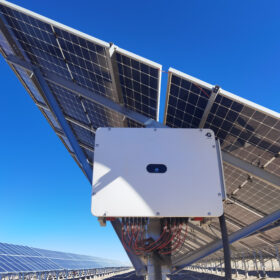
Bangladesh slashes import duty on solar inverters
Bangladesh has cut the import duty on solar inverters from 10% to 1% to reduce project costs and support utility-scale and rooftop PV systems under its net metering scheme.

US solar companies using AI tools to streamline design, service, support
EnergySage, Scanifly, Freedom Forever, and Bodhi have all introduced AI-supported tools for solar design, customer service, and workflow management.

‘The battery market is far from saturated’
Cornex Chairman Dai Deming discusses battery prices and R&D prospects in an exclusive interview with pv magazine. He says the company’s effective production capacity exceeded 110 GWh in the first quarter of 2025, ranking second in the lithium-ion battery industry.
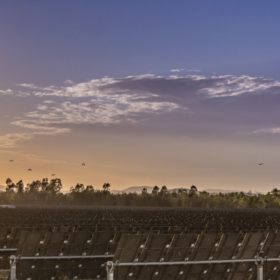
Genex opens procurement for 775 MW Bulli Creek solar project in Australia
Procurement and works packages for what is set to be one of the largest solar farms connected to Australia’s main electricity grid are now live with developer Genex Power seeking expressions of interest from trade contractors and suppliers for the Bulli Creek Solar project.
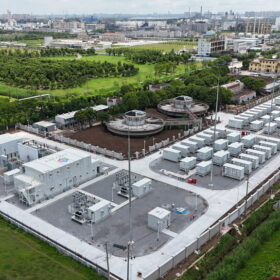
China Energy Engineering launches record 25 GWh storage tender as prices hit historic low
China Energy Engineering Corporation’s landmark procurement signals a shift toward market-driven energy storage, with bids reflecting aggressive cost-cutting and rising industry consolidation.

GCL Optoelectronics finishes 1 GW perovskite PV module factory in China
GCL Optoelectronics has commissioned a 1 GW perovskite solar module facility in China, and says it may increase capacity to 2 GW per year depending on market demand.
Indian state utility to deploy 1.07 GW of solar for irrigation
Maharashtra State Power Generation Co. Ltd. (MAHAGENCO) says it will commission 1.071 GW of solar under the Indian state’s Solar Agriculture Feeder Scheme 2.0 to supply daytime irrigation electricity to more than 300,000 farmers.
