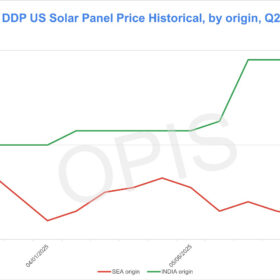
US panel price spread widens between India and Indonesia/Laos origin
In a new weekly update for pv magazine, OPIS, a Dow Jones company, reports that US-assembled modules with imported cells continue to be heard between $0.26/W and $0.33/W, while modules with domestic content – which are still limited to just a handful of producers – are generally quoted between $0.4/W and $0.5/W.

Persistent wildfires in Canada create cross-continental solar drag
In a new weekly update for pv magazine, Solcast, a DNV company, reports that smoke from ongoing Canadian wildfires has continued to suppress irradiance levels across Canada and the Eastern US into June, with impacts stretching as far as Europe.
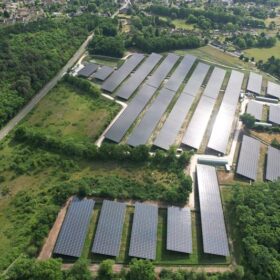
Solar-aviary projects come online in France
French renewables producer Unite has completed two solar-aviary projects selected by France’s Energy Regulatory Commission (CRE) in recent tenders for innovative PV solutions.

New platform enhances grid integration, real-time geospatial metering
Singapore-based EDMI, a subsidiary of Japan’s Osaki Electric, has launched NEOS Solution, a next-generation electricity grid platform designed to orchestrate distributed energy resources (DER) and enable real-time meter monitoring during blackouts.

Hungary’s largest battery storage facility comes online
MET Group has switched on Hungary’s largest battery, a 40 MW/80 MWh system, at the site of a power station near Budapest.
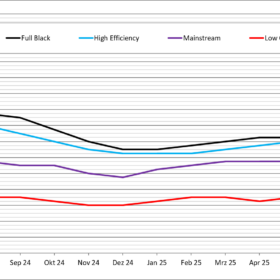
Solar module prices falling with no clear trend in sight
Solar module prices in Europe have fallen by up to €0.01 ($0.01)/W this month, according to pvXchange.com, as the PV market shows resilience amid policy uncertainty and geopolitical risks.
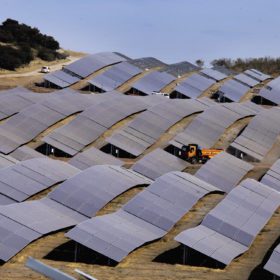
Iberdrola’s 500 MW Núñez de Balboa PV plant reportedly caused Spain blackout
Spanish grid operator Red Eléctrica de España (REE) says a PV project in Badajoz was responsible for Spain’s massive power outage on April 28. Media reports have now revealed that the solar plant is the 500 MW Núñez de Balboa photovoltaic facility, which is owned by Iberdrola.
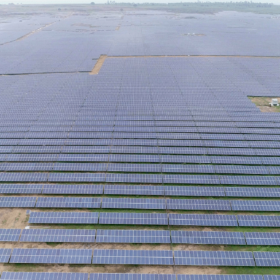
India’s solar potential estimated at 10.8 TW
A new study by the Energy and Resources Institute (TERI) has estimated India’s total solar potential at 10,830 GW, significantly higher than the previous 2014 assessment of 748 GW by the Ministry of New and Renewable Energy (MNRE). The study revisits conventional solar deployment areas such as barren and unculturable lands and explores additional avenues to expand the country’s solar potential.

Zambia invests $40 million in solar for schools, hospitals
Zambia has launched a $40 million investment under its Presidential Solar Initiative to install solar systems at 209 public institutions, including schools and hospitals.

Hungary’s solar capacity nears 8 GW
Data from transmission system operator MAVIR shows that solar energy production in Hungary reached a new peak on June 13, producing enough energy to serve the country’s domestic electricity requirements entirely from renewables.
