
Global PV equipment market to reach 2.6 times current size by 2035
A new study by Germany’s mechanical engineering association (VDMA) finds global capital expenditure on PV manufacturing equipment will grow to more than 2.5 times current levels by 2035, with European suppliers retaining competitive strengths for now despite structural challenges.
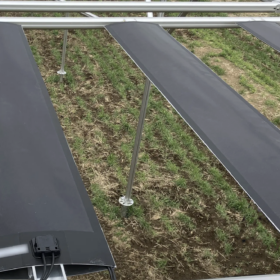
Sekisui-led consortium testing film-type perovskite solar for agrivolatics
A Japanese consortium is piloting agrivoltaics using film-type perovskite solar cells over rice paddies to study energy generation alongside crop production. The three-year project will assess impacts on rice yield, land use, and emissions while testing the technology’s performance and commercial viability.

How many solar projects have been backed by the UK government?
Clean energy projects data reveals projects that have secured some kind of government backing since the last general election in July 2024. The largest projects are backed through contracts-for-difference allocation rounds, while rooftop support has been ramping up on schools and hospitals.

Saudi Arabia adds around 7.8 GW of solar in 2025
Saudi Arabia had a record year for solar deployment last year, taking cumulative capacity past 12.4 GW. GlobalData is forecasting annual deployments to increase in the coming years but notes that they remain behind the pace required to meet the country’s target of 130 GW of renewables by 2030, instead nearing the goal by 2035.
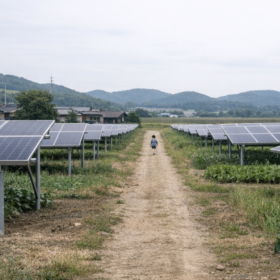
South Korea targets 2,500 community solar cooperatives by 2030
The South Korean government has launched a national drive to establish community-owned village solar cooperatives across the country, with more than 500 sites to be selected this year and KRW 550 billion ($366.4 million) in national funds earmarked for 2026.
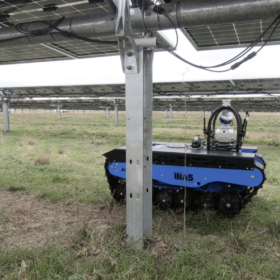
Australian science agency trials AI robots for solar farms
Australia’s national science agency says AI-driven robots could reshape solar maintenance across large-scale PV projects after successfully trialing the cutting-edge technology.
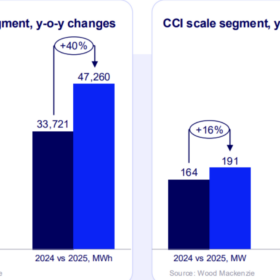
US installs record 18.9 GW of energy storage in 2025
The United States added 18.9 GW of energy storage capacity in 2025, a 52% increase year on year, according to Wood Mackenzie.

Waaree approves INR 39 billion solar glass factory investment
Waaree Energies has approved a capital expenditure of INR 39 billion ($415 million) to build a solar glass manufacturing facility with a capacity of 2,500 metric tons (MT) per day through its subsidiary Waaree Green Glass.
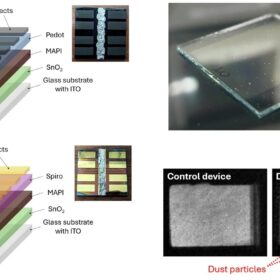
Perovskite solar cells can be made without expensive cleanrooms
Swansea University researchers found that perovskite solar cells can tolerate dusty fabrication environments, performing almost as well as those made in cleanrooms. The findings suggest low-cost, scalable production may be possible without ultra-sterile conditions, potentially accelerating cell and module manufacturing.
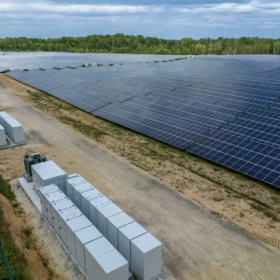
France proposes linking solar subsidies to storage as prices turn negative
France’s energy regulator plans to link PV support to storage as negative power prices increase and reduce solar revenues.
