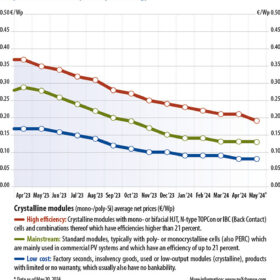
Low prices for TOPCon solar panels put pressure on PERC
In May 2024, high-efficiency panels, predominantly glass-glass modules equipped with tunnel oxide passivated contact (TOPCon) cells began to converge on price with mainstream offerings, writes Martin Schachinger, of pvXchange. Production volumes for these negatively-doped, “n-type” cells and modules have been ramped up in China while the increasingly restrictive customs situation in the United States may already be having an impact. For the European market, ever-lower prices for the latest module technology would suggest that demand would continue to rise were it not for a number of disruptive factors.

Fire at South Korea primary lithium battery factory kills 22
At least 22 people, most of them foreign nationals, were killed in a massive fire at a South Korean factory that manufactures non-rechargeable lithium batteries in Hwaseong city, just south of Seoul. The cause of the blaze is still being investigated.

Israel to provide incentives for hybrid solar inverters
Israel’s Ministry of Energy says it will exempt hybrid solar inverters from purchase tax and customs duties. It claims that these policy mechanisms will help during energy emergencies.
Italy allocates 145.5 MW of PV in latest renewables auction
The Italian authorities have allocated 243.3 MW of renewables capacity in the nation’s 14th procurement exercise for clean energy. Developers have offered a maximum discount ranging between 2% and 5.5% from the auction ceiling price of €0.07746 ($0.083)/kWh.
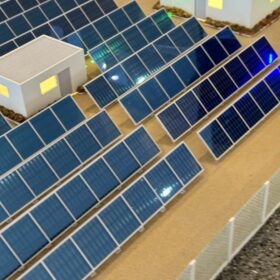
Larsen & Toubro wins 185 MW/254 MWh solar-plus-storage project in India
Larsen & Toubro (L&T) has secured a contract to build a 185 MW grid-connected solar project and a 254 MWh battery energy storage system (BESS) in Bihar, India.
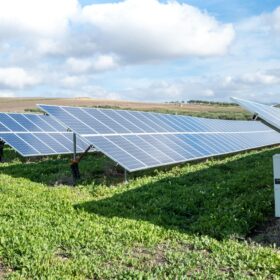
Chinese joint venture to build 100 MW ‘semi-agrivoltaic’ plant in Bangladesh
A Bangladeshi-Chinese joint venture plans to build a 100 MW “semi-agrivoltaic” project in Madarganj, Bangladesh. The facility will produce green chilies, turmeric, and ginger.

Masdar buys out Greece’s Terna Energy in €3.2 billion deal
Masdar has agreed to acquire initially 67% of Greece’s Terna Energy, a developer of clean energy infrastructure, in a €3.2 billion ($3.4 billion) deal.
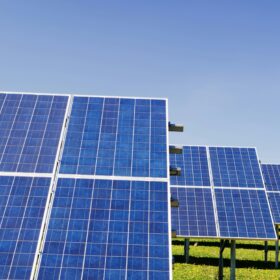
Australian capacity tender flooded with 40 GW of renewable energy projects
Australia’s first national Capacity Investment Scheme auction has been inundated with expressions of interest, with the federal government revealing that investors have tabled 40 GW of new renewable energy generation projects such as wind and solar.

Green Deal will remain after EU elections, just with different marketing, says analyst
In an interview with pv magazine, Linda Kalcher, executive director at European think tank Strategic Perspectives, described the possible consequences of the recent EU elections on the continent’s energy landscape. “Investors and businesses need security and predictability to thrive,” she said. “If cleantech is not manufactured here, the jobs and investments go to the US and China and a deindustrialisation looms. This cannot be in the interest of any politician,”

Intersolar 2024: Day 3: Tecloman unveils Cubox mobile storage platform
Our pv magazine newshounds will be walking the floors for one last time in Munich today as Intersolar Europe 2024 winds down for another year.
