Long-duration storage market to hit $223 billion in 20 years, says IDTechEx
Alternatives to lithium-ion batteries will likely emerge in the years to come, according to a new report by IDTechEx.

Cyprus set to curtail 28% of renewable electricity in 2024
The Transmission System Operator of Cyprus (TSOC) predicts that transmission and distribution grid operators will need to curtail 28% of the nation’s annual green energy production in 2024.
Zambian utility launches EPC tender for 7.5 MW of solar
State-owned power utility Zesco has kicked off the first stage of an engineering, procurement and construction (EPC) tender for a 7.5 MW solar plant in Lusaka province, Zambia. The deadline for expressions of interest is Feb. 16, 2024.

Kosovo reveals shortlisted bidders for 100 MW solar tender
Kosovo has shortlisted six bidders in its first solar auction. The bidder chosen to construct the 100 MW plant will secure a lease for up to 30 years, backed by a 15-year power purchase agreement (PPA) with Kostt, the national market operator.
Africa’s annual PV additions hit 3.7 GW in 2023
According to new figures from the Africa Solar Industry Association (AFSIA), the continent’s cumulative installed PV capacity reached 16 GW at the end of December, based on 3.7 GW of new annual installations.
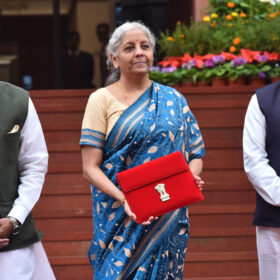
India focuses on residential rooftop PV, EV infrastructure in new budget
Indian Finance Minister Nirmala Sitharaman has submitted an interim national budget for fiscal 2024-25 to parliament, with a focus on residential rooftop solar, funding for offshore wind, and support for EV manufacturing and charging infrastructure.
Solar waste to provide material supply security
Researchers from the University of New South Wales have rejected suggestions that end-of-life solar panels could create a “waste mountain” in Australia, saying instead that they could serve as valuable material reservoirs for future production.
Greek utility secures funding for 550 MW PV plant at former coal mine
Greece’s Public Power Corp. (PPC) has secured funding for the construction of a 550 MW solar plant at a former lignite mine. The state-owned utility says that, upon completion, the plant will cover almost 2.5% of domestic electricity generation.
Solar PV technical and vocational training in Africa: best practices from the field
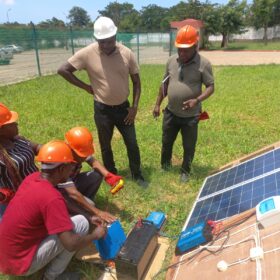
Training and capacity-building become fundamental to effectively support the deployment of renewable energy technologies in Africa. For this reason, RES4Africa Foundation, under the umbrella of the RES4Africa Academy, provides multi-level capacity-building to guarantee open access, inclusivity, youth and women empowerment, linkages with industry and the labour market, and customization to local requirements, among others.

Chinese PV Industry Brief: Shenzhen Hiking PV to set up GW-level factory
Shenzhen Hiking PV has unveiled plans to set up a joint venture with a state-run company to build gigawatt-level perovskite/polysilicon tandem cell and panel production capacity in Guangdong province, while Hoshine has announced progress at its PV integration park in Xinjiang.
