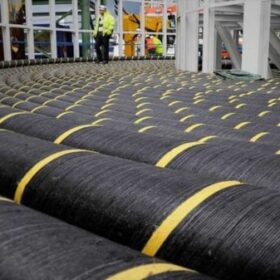
UK government scrutinizing British-Moroccan solar-wind interconnector
The UK government is now evaluating a 3,800-km submarine cable that Xlinks plans to build. It will connect a 10.5 GW wind-solar facility in Morocco to locations in Wales and England. The UK authorities might eventually buy power from the plant via a contract-for-difference scheme.

Ireland to slash VAT on residential PV to 0%
The Irish cabinet plans to present a new measure in its finance bill this week to eliminate value-added tax (VAT) on solar products.
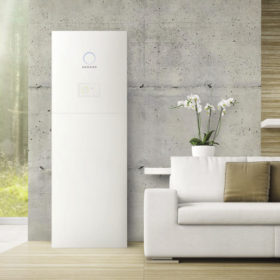
Austria launches $16 million rebate scheme for residential storage
Austria’s new incentive program will support the deployment of residential batteries with storage capacities of 4 kWh to 50 kWh.
Spain reports soaring number of hybrid wind-solar projects now under review
Spain’s Ministry for the Ecological Transition says it is now reviewing a significant amount of hybrid wind-solar power projects. The developers include Iberdrola, Acciona, Forestalia, Ignis, and Enel Green Power.
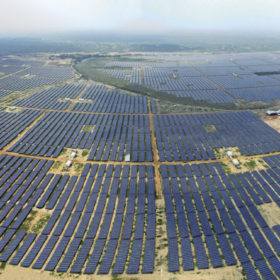
India launches 2 GW solar tender
Developers have until May 10 to submit bids to set up 2 GW of solar capacity anywhere in India, as long as the installations are connected to the interstate transmission system. The projects will be developed on a build-own-operate basis.
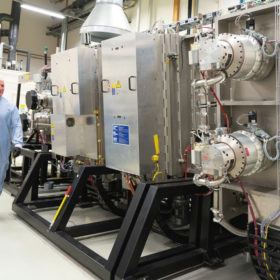
Weekend Read: Industry and researchers in tandem
As efficiency records tumble and devices become more stable, Europe is seeing the beginnings of a race to commercialize high-efficiency perovskite-silicon tandem solar products, reports Valerie Thompson.
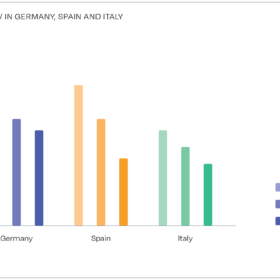
PV payback times hit average of 20 years in 2022, says SolarPower Europe
High interest rates and hefty capex drove up the average payback time for solar in Germany, Spain and Italy to around 20 years in 2022, according to a new report by SolarPower Europe (SPE) and Energy Brainpool. pv magazine recently spoke with SPE Market Analyst Christophe Lits to crunch the numbers.

Belgian developer starts digging hole for geothermal heat pumps in Bruges
Property developer Steenoven and an undisclosed construction contractor have started drilling a borehole for a new thermal energy storage system in the historic city of Bruges, Belgium.
Chinese module prices to fall by 15% from Q4 2022 to Q4 2023, says CEA
Solar module prices will be pressured by rising industrial capacity this year, with capacities doubling in the ingot/wafer stages and potentially quadrupling for polysilicon by 2027, according to the latest PV pricing report from Clean Energy Associates (CEA).
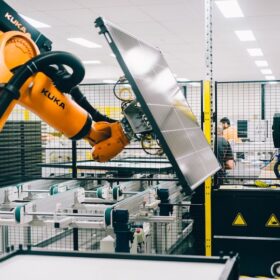
Australia to earmark $10 billion fund to support clean energy manufacturing
Both houses of the Australian parliament have approved plans to establish an AUD 15 billion ($10 billion) national reconstruction fund to support domestic manufacturing in future industries and reduce the nation’s dependence on imports.
