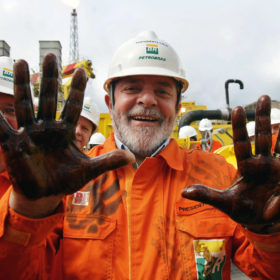
Weekend Read: Can Lula deliver on Brazil’s solar hopes?
Brazil’s newly elected government, under Luiz Inácio “Lula” da Silva, will face energy-transition and decentralization issues during critically important years in the fight to curb climate change. Livia Neves reports from Rio de Janeiro.

Tokyo introduces mandatory PV requirements for new buildings, homes
The Tokyo Metropolitan Assembly has approved new provisions to make solar installations mandatory for new homes. The rules apply to homes with total rooftop areas of more than 20 square meters, and to buildings with rooftops smaller than 2,000 square meters.
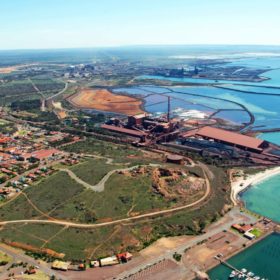
South Australia launches tender for $398 million green hydrogen power plant
The South Australian government has called for proposals from industry partners to build a $398 million (AUD 593 million) green hydrogen power plant, including 250 MW of hydrogen electrolyzer facilities and fit-for-purpose hydrogen storage infrastructure on the Eyre Peninsula.

Construction begins on Bulgaria’s largest solar plant
Bulgarian developer Sunotec says it expects to complete the 124 MW Verila solar project by the end of 2023. It says it will build the array at an altitude between 700 meters and 1,000 meters above sea level.
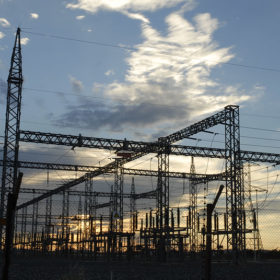
South Africa’s Eskom kicks off 36.5 MW/146 MWh storage tender
South African utility Eskom aims to develop 35 MW/140 MWh of battery storage capacity at its substations in Eastern Cape province. The tender will also accept bids for a 1.5 MW/6 MWh storage system, plus 2.04 MW of solar PV at another substation. Eskom started building the country’s first battery energy storage system (BESS) last week.
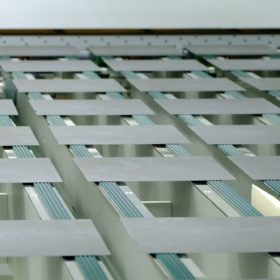
CubicPV plans 10 GW of conventional silicon wafer production
CubicPV, backed by $26 million in new funding, has announced plans to make silicon wafers in the United States, which would fill a critical gap in the US solar supply chain.
Adani moves forward with 30,000 MT polysilicon project in India
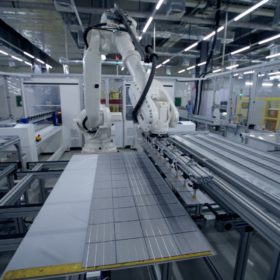
Adani has selected Engineers India Ltd. (EIL) to set up 30,000 metric tons (MT) of polysilicon production capacity and 500 MT of monosilane capacity in India.

US grid-scale, residential energy storage hit installation records in Q3
Wood Mackenzie says 96% of US grid-scale storage deployments in the third quarter occurred in Texas and California.
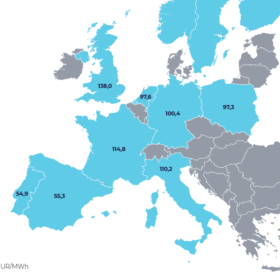
European PPA prices increased by 7.4% in November
European prices for power purchase agreements rose in several countries in November, with the Polish index recording an increase of 19.4%. Portugal registered an increase of 15.5%, followed by Spain at 15.7%. Germany was the only country that recorded a monthly decline, with prices falling by 0.8%.
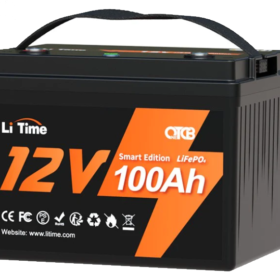
LiTime unveils 100 Ah lithium iron phosphate battery for residential PV
Shenzhen LiTime Technology’s new lithium iron phosphate battery system has a nominal voltage of 12.8 V and a capacity of 100 Ah. It comes with a five-year warranty and can purportedly operate for more than 4,000 cycles.
