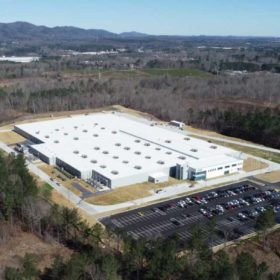
Inflation Reduction Act triggered plans for 46 factories, says industry group
Since the passage of the US Inflation Reduction Act (IRA) last August, the utility-scale clean power sector has announced $150 billion in funding, 46 new manufacturing facilities, and nearly 20,000 new jobs, according to the American Clean Power Association.
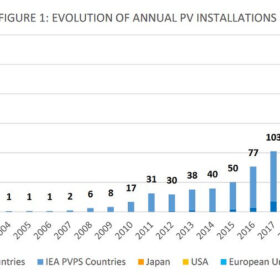
Global solar installations hit 240 GW in 2022
IEA-PVPS has used an improved methodology to determine that newly installed PV capacity in 2022 must be somewhere between the 190 GW calculated by the International Renewable Energy Agency (IRENA) and the 268 GW announced by BloombergNEF. Its new “Snapshot of Global PV Markets 2023” report was built on data from a range of sources, including grid-connected and off-grid figures.
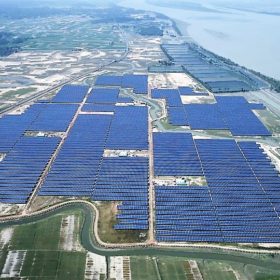
Bangladesh to buy power from 64 MW of solar at $0.107/kWh
The Bangladesh Power Development Board (BPDB) has agreed to buy power under a 20-year power purchase agreement (PPA) from two solar plants with capacities of 20 MW and 44 MW.
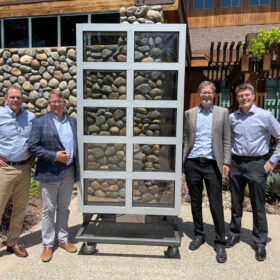
US startup secures $3 million to develop organic PV-coated windows
Next Energy Technologies has secured a grant from the California Energy Commission (CEC) to develop its organic photovoltaic coating for commercial windows.
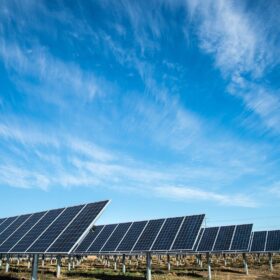
New Zealand to fast-track approval process for solar projects
New Zealand’s large-scale solar market is set to shift up a gear, with the government referring two PV projects to an independent fast-track consenting panel. The installations have a combined generation capacity of more than 500 GWh per annum.

Key takeways from SiliconPV 2023
The annual SiliconPV Conference came to TU Delft in the Netherlands last week and offered an important health check for the science and technology behind solar energy. pv magazine was on site to hear the latest from researchers reaching for higher efficiency through tandem cells and other innovations, and working to cut down solar technology’s consumption of rare and expensive materials.
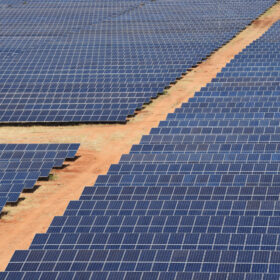
Avaada Energy wins 560 MW solar project with $0.035/kWh bid in India
Avaada Energy has won a 560 MW (DC) solar project from Maharashtra State Electricity Distribution Co. Ltd. (MSEDCL). The project will supply power to MSEDCL at a tariff of INR 2.88 ($0.035)/kWh.

Chinese solar module makers announce new TOPCon plans
DAH Solar says it wants to reach 5.5 GW of TOPCon solar module capacity by the end of this year. Ronma Solar, meanwhile, says it wants to build an 18 GW panel factory in Jinhua, in China’s Zhejiang province.

Ecuador allocates 120 MW of PV in renewables auction
The government of Ecuador has allocated 500 MW of renewable energy capacity in its latest procurement exercise. The selected developers secured 25-year power purchase agreements (PPAs).
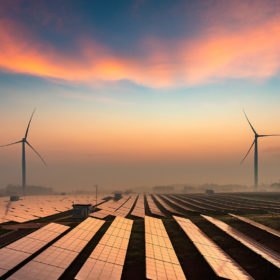
Average solar LCOE increases for first time this year
A new report by Lazard compares the levelized cost of energy (LCOE) for various generation technologies on a $/MWh basis. It shows that utility-scale solar and onshore wind LCOE increased for the first time in 2023, at $24/MWh to $96/MWh for solar and $24/MWh to $75 MWh for wind. Nevertheless, the two renewable sources are still the economic frontrunners when compared to nuclear, gas, and coal.
