
Global Solar Council launches global trade association for battery storage
The Global Solar Council has launched what it calls the first global trade association for battery storage to drive manufacturing, deployment, recycling, and adoption of new technologies.
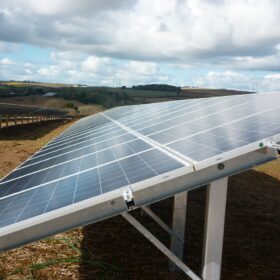
Inox Solar starts production at first 1.2 GW phase of module plant in India
Inox Solar has commissioned the initial 1.2 GW phase of its 3 GW solar module factory in India, advancing its plan for full-scale domestic production.
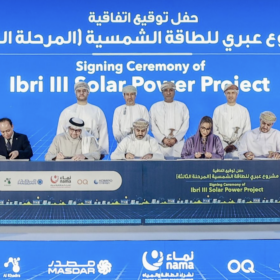
Oman selects developers for 500 MW solar-plus-storage project
A consortium including Abu Dhabi Future Energy Co. (Masdar), Al Khadra Partners, Korea Midland Power Co. and OQ Alternative Energy have been chosen to build a 500 MW solar project in Oman, integrated with a 100 MWh battery energy storage system.
Solar and wind integration crucial as Southeast Asia electricity demand grows
The International Energy Agency’s latest report says solar and wind energy are well placed to meet Southeast Asia’s growing electricity demand. It adds that while additional deployment will create flexibility challenges, most countries in the region can integrate more solar and wind energy without requiring major system changes.
Renewables overbuilding, proactive curtailment can reduce Europe’s energy system costs
New research from the Netherlands showed that renewables and short-term storage can meet around 92.5% of Europe’s electricity demand in future energy scenarios, with the remaining 7.5% being satisfied by green hydrogen. The scientists considered Europe as fully self-sufficient with zero import-export of power or hydrogen, with each of the 37 countries included in the modeling having a self-sufficiency rate of at least 80%.
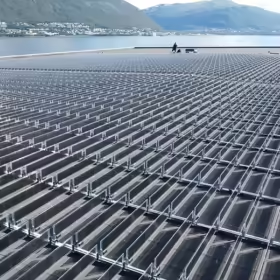
World’s largest vertical rooftop solar installation deployed in Norway
Vertical solar specialist Over Easy Solar has broke its own record for the world’s largest rooftop vertical solar array with a 320 kW system in the north Norwegian city of Tromsø.

Cobalt-iron catalyst boosts zinc-air battery stability and performance
Engineers at Monash University in Australia have developed a new catalyst they say could bring zinc-air batteries “closer to real-world, grid-scale and transport uses.”
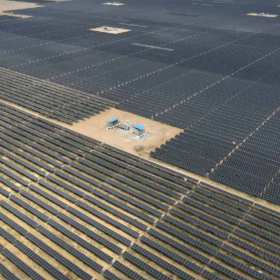
India on track to add more than 45 GW of solar in fiscal 2026
India installed 18 GW of solar in the first five months of fiscal 2026 and is projected to exceed 45 GW for the year, with rooftop and open-access systems driving growth alongside tax cuts and expanding manufacturing capacity.

Solar, storage push US tax credit market near $60 billion in 2025
Crux’s mid-year report says the US transferable clean energy tax credit market is on track to approach $60 billion in 2025, nearly double last year, led by solar and storage.
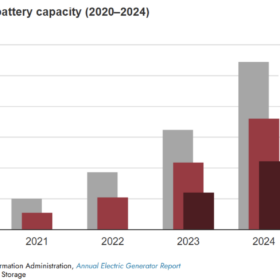
Arbitrage remains leading use case for US grid-scale batteries
Arbitrage has remained the dominant use case for utility-scale batteries in the United States through 2024. However, the share of the cumulative fleet reporting it as their primary application has stayed roughly the same percentage-wise.
