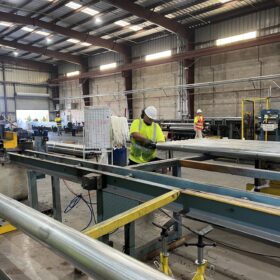
US steel crunch puts solar deployment plans at risk
With US domestic steel mills booked solid through 2025, a sudden doubling of tariffs on imported steel has created a critical bottleneck for American industries. The move, which hits specialized Indian steel particularly hard, is now delaying projects for builders and renewable energy developers who rely on steady, affordable supply.

Seven projects pulled from EU hydrogen fund
The projects, equivalent to 1.88 GW of electrolyzer capacity, were withdrawn after choosing not to continue with the agreement procedure or for being unable to provide a signed completion guarantee. As a result, ten hydrogen projects representing 774 MW in capacity from the reserve list have been invited to prepare grant agreements.
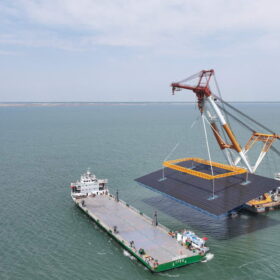
China building 1.8 GW offshore PV project in Bohai Sea
A state-led 1.8 GW offshore PV plan in Changli, China’s Hebei province, is set to become a model for large-scale marine solar development, with completion targeted by mid-2026.
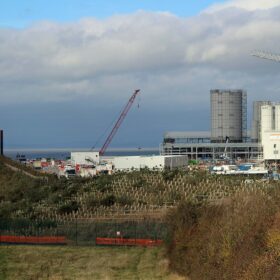
Record nuclear power output in 2024 irrelevant to global energy landscape
Nuclear plants generated a record amount of power in 2024, surpassing record set in 2006, but industry optimism is not backed by economic data or investment, says the World Nuclear Industry Status Report 2025.

Avaada opens 280 MW solar plant in India, starts 100 MW project
Indian Prime Minister Narendra Modi inaugurated Avaada’s 280 MW solar project in Gujarat while laying the foundation stone for a 100 MW facility in the state.

Chinese PV Industry Brief: Inverter manufacturers report solid H1 results
Sungrow, Ginlong Solis, GoodWe and Deye all posted higher first-half revenue in 2025, with Sungrow leading on storage growth and Deye delivering the strongest margins.
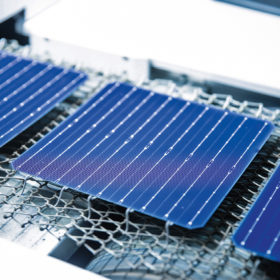
JinkoSolar, Longi settle global patent dispute with cross-licensing deal
China’s two largest solar manufacturers have ended a protracted global patent battle, agreeing to cross-license core technologies in a move that could reshape the industry’s innovation landscape.

‘Progress is happening, but it remains slow’
This week Women in Solar+ Europe gives voice to Maria Gil, Business Development EU at Spain’s Solargrade. She says that real change in the energy industry only comes when companies and institutions move beyond statements and consistently turn policies into sustained action. “As the sector grows and requires more workers, it must bring in talent with equity at its core, ensuring inclusion moves from policy documents into everyday practice,” she states.

Making BESS warranties work: Contracts vs. reality
Striking a careful balance between technical limitations, market ambitions, and contractual realism in operating battery energy storage systems (BESS) is no easy task. Rigid battery warranties can often be a make-or-break factor in BESS asset management. As a result, many industry players now argue that adopting a more flexible approach to warranties could unlock greater value from these inherently flexible assets.
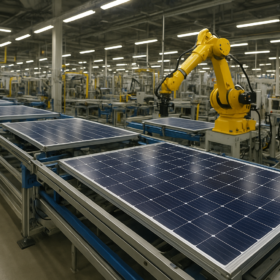
Netherlands ends incentive scheme for domestic PV manufacturing
The Dutch government says large-scale solar panel production is no longer viable, closing its SolarNL incentives to building- and vehicle-integrated products, heterojunction modules, and perovskite-silicon tandem panels.
