
‘When facing career challenges, it’s all too easy to feel isolated’
This week, Women in Solar Europe (WiSEu) gives voice Molly Morgan, Senior Research Analyst at UK-based CRU. She says that mentoring platforms offer aspiring professionals access to relatable role models, providing both inspiration and practical guidance to help them overcome their challenges and thrive in their careers. “A way to address the issue of women making up the minority share in the PV industry would be to encourage more women to enter the world of renewable energies earlier whilst still in academia,” she states.
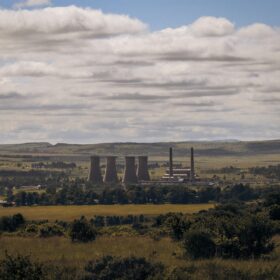
Eskom tenders 72 MW of solar at coal power plant
Eskom is seeking a contractor to provide turnkey design, engineering, operation and maintenance services for a solar project at the Komati Power Station, South Africa.

Philippine distribution utility streamlines net-metering permits
The Philippnes’ Energy Regulatory Commission has permitted local utility More Power to create a one-stop shop for processing net-metering and distributed energy resources (DER) applications. The initiative is set to benefit consumers in Iloilo City, Central Negros and Tagbilaran, Bohol.
Bulgaria allocates 3 GW of renewables capacity, 1.17 GW of storage in auction
The Bulgarian authorities awarded BGN 526 million ($284 million) to 397 renewable energy projects in the country’s latest procurement exercise.
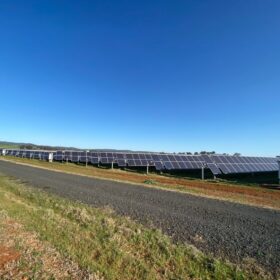
Australia launches 6 GW wind, solar tender
Registration has opened for the Australian government’s fourth Capacity Investment Scheme tender, which aims to underwrite contracts for 6 GW of new solar and wind projects.
UK records 1 GW of new solar in 12 months as pipeline swells
Government data records 17.2 GW of deployed solar capacity in the United Kingdom at the end of October 2024. Planning applications for three plants with combined capacity exceeding 1.8 GW submitted in November 2024, suggesting potential for greater additions in the future.

Netherlands maps all PV-related building fires
Three Dutch research institutes have released a report detailing fire incidents in buildings with PV systems. Between 2022 and 2023, PV systems were linked to 31 fire accidents across the country.
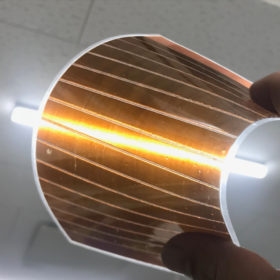
Japan aims to deploy 20 GW of perovskite solar by 2040
The Japanese government says it expects perovskite solar modules to be produced in large quantities at JPY 20 ($0.13)/W by 2025, JPY 14/W by 2030, and JPY 10/W by 2040.
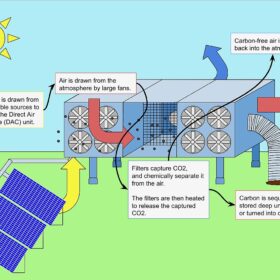
Coupling PV with direct air capture
Researchers in China have suggested to combine PV plants with direct air capture (DAC) technologies in an effort to reduce solar curtailment and increase DAC competitiveness. They found that the proposed combination could become viable by 2030, especially if carbon prices will increase.
Germany commits €24 billion to build national hydrogen network
KfW Development Bank has offered €24 billion ($25.2 billion) grant to bridge the gap between network operators’ high investment costs and the initially low revenues from network charges.
